Windows Doors Manufacturer

Leave Your Message
Need Project Quote?
Chat With Us Now
Chat With Us Now
Windows Doors Manufacturer
Engineered for high-traffic environments, providing superior thermal efficiency, structural integrity, and architectural flexibility.
Modern commercial architecture is undergoing a paradigm shift. The conventional boundaries between indoor workspaces and outdoor environments are dissolving. At the center of this architectural revolution is the aluminum folding window for commercial buildings. Historically, commercial facades relied heavily on static curtain walls or standard sliding windows. However, today's developers, architects, and business operators demand dynamic spaces that adapt to changing weather, occupancy levels, and functional requirements.
Aluminum, as a material, offers the perfect structural matrix for large-scale folding window systems. Its high strength-to-weight ratio allows for incredibly slim profile sightlines while supporting massive, heavy-duty double or triple-glazed glass panels. This structural integrity is critical for commercial applications where wind load resistance, security, and repetitive operation cycles are paramount. By integrating advanced folding hardware with thermal break technology, commercial folding windows deliver the dual benefits of visual grandeur and uncompromising energy efficiency.
The global demand for high-performance architectural glazing systems is experiencing unprecedented growth. Driven by strict environmental regulations, such as LEED certification requirements in North America and the Energy Performance of Buildings Directive (EPBD) in Europe, commercial builders are prioritizing low-U-factor window systems. The integration of "broken bridge" or thermal barrier technology within aluminum profiles has transformed folding windows from luxury residential features into highly viable commercial facade solutions.
According to recent green building market reports, commercial properties utilizing thermally broken aluminum window systems report up to a 28% reduction in HVAC energy consumption. Furthermore, businesses in the hospitality sector experience a direct correlation between flexible storefront layouts and increased foot traffic.
Additionally, urbanization has led to a premium on space optimization. Commercial folding windows allow businesses to maximize their usable footprint. When folded open, these windows stack neatly to the sides, creating barrier-free transitions that effectively merge interior dining rooms, offices, or retail floors with the surrounding cityscape. This spatial flexibility directly translates to higher commercial viability and customer engagement.
To truly appreciate the value of aluminum folding windows, one must examine their diverse application scenarios across various commercial sectors:
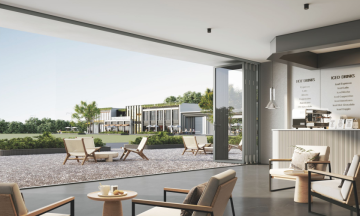
In the hospitality industry, ambience is everything. Restaurants, cafes, and rooftop bars utilize folding windows to create seamless alfresco dining experiences. During warm, pleasant seasons, the entire facade can be folded away, inviting pedestrians in and offering diners an open-air atmosphere. When winter or inclement weather arrives, the system closes securely, maintaining a thermally comfortable indoor climate while preserving panoramic street views.
Modern office designs focus heavily on employee wellness and collaborative environments. Aluminum folding windows are increasingly installed as interior room dividers or exterior balcony connections. They allow corporate offices to quickly transform closed conference rooms into open-air breakout zones. The influx of natural daylight and fresh air has been proven to enhance cognitive function, reduce stress, and improve overall workplace productivity.
For retail spaces showcasing large merchandise, such as car dealerships or luxury furniture showrooms, access and visibility are critical. Heavy-duty folding window systems allow for the effortless movement of oversized products in and out of the building. When closed, the expansive glass panels act as high-clarity display cases, attracting passing consumers with unobstructed views of the interior.
Schools, universities, and community centers require highly adaptable spaces. Folding window systems act as flexible partitions that can divide large auditoriums into smaller classrooms or open up indoor gyms to outdoor recreational fields, facilitating multi-functional layout management.
Understanding the engineering behind an aluminum folding window for commercial buildings is essential for proper specification. The term "broken bridge" or "thermal break" refers to the insertion of a low-conductive material (typically reinforced polyamide nylon strips) between the inner and outer aluminum profiles. This barrier disrupts the thermal conduction path, preventing heat from escaping during winter and blocking external heat from entering during summer.
Equally critical is the hardware system. Commercial folding windows are subjected to heavy daily use. Therefore, high-precision stainless steel rollers, heavy-duty hinges, and multi-point locking mechanisms are non-negotiable. These components ensure smooth, effortless sliding and folding operations even when supporting double-glazed panels weighing upwards of 100 kg per sash. The integration of advanced EPDM weather stripping ensures superior airtightness, watertightness, and acoustic insulation, keeping bustling city noises outside the commercial interior.
As the construction industry moves towards a smarter and greener future, commercial folding window systems are evolving in tandem. We are witnessing the rise of motorized folding systems integrated with smart building management systems (BMS). With the touch of a button or via automated weather sensors, entire commercial facades can open or close to optimize indoor air quality and passive solar heating.
Furthermore, sustainable manufacturing is becoming a key differentiator. Leading manufacturers like CIVO are focusing on utilizing recycled aluminum alloys and eco-friendly powder coating processes. By minimizing the embodied carbon of architectural elements, developers can achieve environmental targets while building structurally superior, aesthetically breathtaking, and highly profitable commercial properties.
CIVO is a provider of architectural aluminum system solutions, integrating research and development, production, sales, and service of system door and window products. With the slogan "MAKE BUILDINGS MORE FLEXIBLE," the CIVO brand is committed to delivering quality-oriented home building materials and enabling countless households to experience the unique charm of high-end system doors and windows.
According to the geographical climate and local architectural styles of different regions, CIVO has developed a series of high-quality, safe, and energy-efficient products designed to meet the needs of high-end consumer groups. Since its establishment, CIVO has taken product safety as its core responsibility, ensuring that every product reflects its commitment to durability, performance, and security.

Our commitment to global standards, quality assurance, and patented architectural technology.


State-of-the-art manufacturing facility optimized for precision engineering and high-volume production.


Utilizing high-precision automated machinery to guarantee the structural integrity of every aluminum profile.


Connecting with industry leaders, architects, and global partners at international building material trade shows.


Where innovation meets engineering. Developing cutting-edge thermal insulation and structural window designs.


Explore our full range of thermal broken solutions, including sliding, folding, inward, and outward opening systems.
Get in touch with our architectural engineering team today to receive customized CAD drawings, thermal performance calculations, and competitive project quotes.
Contact Our System Experts