Windows Doors Manufacturer

Choosing the right aluminum alloy door in 2026 isn’t just about comparing finishes or prices. Honestly, you’ve got to look at the bigger picture—think about the climate, what kind of building it’s going into, installation conditions, and how easy it will be to maintain over time. For example, a hotel near the coast probably needs better corrosion protection than an office building inland. And a family home might prioritize quiet sliding panels, while a retail shop could require wide-folding or pivot doors. Basically, the best choice depends on the specific project you’re working on.
This guide covers the main Types Of Doors—thermal-break, sliding, casement, folding, pivot, and slim-frame systems—and breaks down where each one really shines and where it might fall short. For instance, thermal-break profiles can boost indoor comfort, but remember, the quality of the glass and how it’s installed still matter big time. Even a super-premium frame won’t fix leaks if the sealing isn’t up to par. So, it’s all about doing your homework: test for air leakage, water resistance, wind performance, hardware durability, and the quality of the surface coatings. Make sure to ask for detailed drawings, material grades, test reports, and warranty info.
Details really do make all the difference.
From practical experience, I've learned that specs can sometimes get lost in translation, especially across different markets. Like, a listed profile thickness might not include reinforcement or hardware details. Delivery timelines can overlook local unloading, storage, or fitting times. To avoid surprises, it’s smart to double-check dimensions, opening directions, drainage setups, and whether replacement parts are readily available before giving the go-ahead for production. These little checks go a long way in making sure you get what you need without costly revisions later.
Remember, no door is ever perfect. Even the most well-designed system might need a tweak after installation. This article aims to give you a solid framework for comparing suppliers and door styles, setting realistic expectations along the way. It focuses on real-world performance, practical applications, and helping architects, contractors, distributors, and property owners make smarter, more informed decisions—all around the globe.
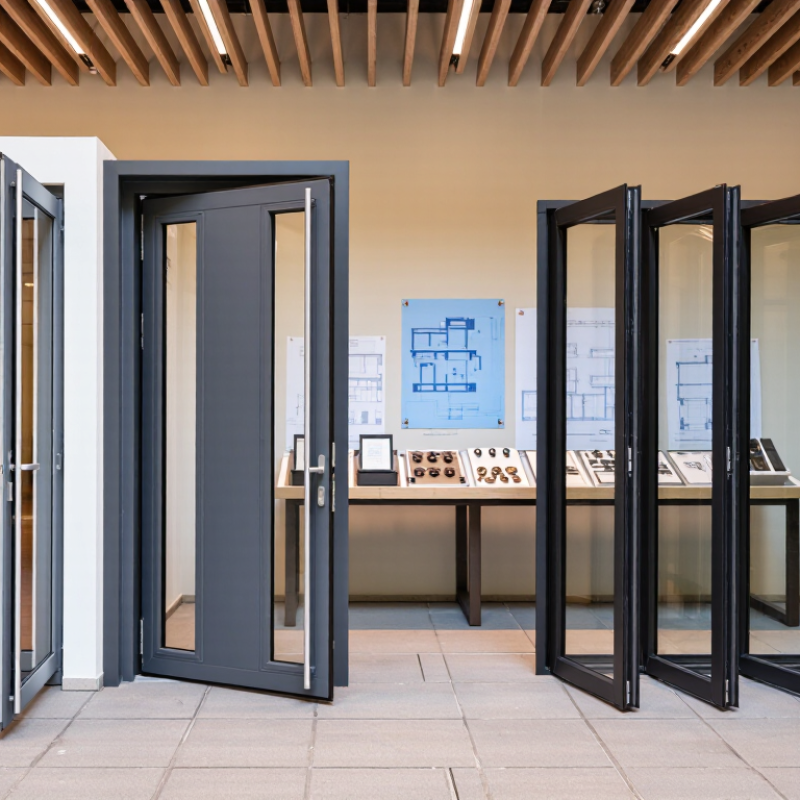
In 2026, an Aluminum Alloy Door is more than a slim metal frame. It is a tested building component with thermal, structural, and environmental responsibilities.Thermal breaks reduce heat transfer through the frame. Multi-point hardware improves compression and sealing. Powder-coated or anodized surfaces also help resist moisture, salt, and daily abrasion.
That distinction matters. The IEA’s Global Status Report for Buildings and Construction 2023 states that buildings consume about 30% of global final energy. They also produce roughly 26% of energy-related emissions. Better doors can support efficient envelopes, but only when installation is precise. The International Aluminium Institute reports that recycled aluminum uses about 5% of the energy required for primary aluminum production. Yet recycled content alone does not prove quality. Numbers need context.
For global buyers, specifications should include thermal transmittance, air leakage, water resistance, wind-load testing, and coating durability. EN 14351-1 and ASTM testing frameworks offer useful reference points, depending on the target market. Aluminum Alloy Windows should follow the same performance logic, especially around glazing edges and frame joints. Ask for verified test reports, alloy designation, wall thickness, and warranty conditions. A door may look strong in a showroom but perform poorly after uneven installation. Some specifications still overpromise. That is where careful review, local climate data, and sample testing become necessary.
Global buyers need to match aluminum alloy door types with climate, building use, and maintenance capacity. The UNEP and GlobalABC 2024 Buildings Global Status Report states that buildings consume about 32% of global energy and create approximately 34% of global carbon emissions. Door selection therefore affects more than appearance.
A Thermal Break Aluminum Door is suitable for cold regions, hot climates, and buildings requiring stronger indoor temperature control. Its insulating barrier reduces heat transfer through the frame. Pair it with low-emissivity glass, multi-point locks, and durable weather seals. For coastal projects, powder-coated or anodized finishes can resist moisture and salt exposure, but coating quality still needs inspection.
Sliding aluminum doors suit balconies, hotels, and compact apartments. Hinged doors usually provide better compression against air and water. Folding systems create wider openings for restaurants and commercial spaces. Fire-rated aluminum doors require certified assemblies, not only thicker panels.
The International Aluminium Institute reports that nearly 75% of aluminum ever produced remains in productive use, supporting its long service potential and recyclability.
Performance varies.
Site checks often expose weak drainage, incorrect installation, or poorly aligned hardware. These details can defeat an excellent profile. Buyers should request thermal transmittance data, air leakage results, water penetration testing, and finish specifications. Regional testing methods are not always directly comparable. That is an uncomfortable limitation. A lower purchase price may also create higher energy and maintenance costs over time.
Door performance begins with the aluminum profile, not the finish. A well-designed thermal-break profile limits heat transfer through the frame. Deeper chambers can also improve stiffness on wide openings. For coastal projects, alloy quality and protective coating deserve careful review. Salt air exposes weak surface preparation quickly. Small gaps matter. Site measurements should include wall movement, drainage paths, and installation tolerance. A profile that performs well in a factory test may disappoint when the opening is uneven.
Glass changes comfort, safety, and operating weight. Double glazing often improves insulation, while laminated glass helps reduce injury risks after breakage. Low-emissivity coatings can support energy control, but their value depends on climate and orientation. South-facing rooms may need solar control more than extra thickness. An Aluminum Sliding Door With Windows should balance glass size against panel weight. Oversized panels can strain rollers and create alignment problems. Bigger is not always better.
Hardware is decisive. Stainless or corrosion-resistant rollers should match the panel load, not only the advertised door size. Multi-point locks can improve security and compression, but poor adjustment may make daily operation frustrating. Drainage channels need regular inspection, especially after dusty construction work. I have seen attractive doors fail because installers skipped final roller adjustment. That weakness is easy to overlook. Buyers should request test data, installation guidance, replacement-part access, and clear warranty conditions before ordering. Forecasting every site problem is impossible, but ignoring these checks is avoidable.
2026 Best Aluminum Alloy Door Types for Global Buyers
For most exterior openings, thermal break systems provide a stronger balance between comfort and durability. A polyamide separator reduces heat transfer between the inner and outer aluminum profiles. In hot regions, it limits indoor heat gain. In cold regions, it helps reduce condensation near the frame. Low-emissivity glass still matters. The frame cannot solve every problem.
Non-thermal break doors suit mild climates, interior partitions, service areas, and budget-sensitive projects. They conduct heat quickly, especially under direct afternoon sunlight. I have seen dark frames become noticeably warm after installation. Their simpler structure can support easier fabrication and maintenance. However, buyers should not treat the lower purchase price as the full project cost.
Sliding systems create wide openings and useful daylight. Their performance depends heavily on rollers, drainage paths, interlocks, and installation accuracy. A poorly adjusted panel may scrape, rattle, or leak during heavy rain. Thermal break sliding doors improve comfort, but their larger glass area can still weaken overall insulation. Ask an Aluminum Window & Door Manufacturer in Global for section drawings, air and water test data, alloy temper, coating specifications, and replacement-part plans. These details often reveal more than a polished catalogue. I would also review the threshold height carefully, because accessibility and water resistance can conflict. The best specification is sometimes a compromise, not a perfect solution.
| Evaluation Dimension | Aluminum Door System Type | ||
|---|---|---|---|
| Thermal Break Hinged Door | Non-Thermal Break Hinged Door | Thermal Break Sliding Door | |
| Basic Construction | Aluminum profiles separated by low-conductivity polyamide insulating strips. | Continuous aluminum profile without a thermal-isolation strip between the interior and exterior sections. | Thermally separated aluminum frames combined with sliding rollers, tracks, and interlocking meeting stiles. |
| Typical Opening Style | Single or double leaf; inward- or outward-opening; hinged, pivot, or tilt-and-turn configurations. | Single or double leaf; commonly used for interior doors, utility areas, and mild climates. | Two, three, or four panels moving horizontally; suitable for wide openings and large glazed areas. |
| Typical Whole-Door U-Value1 | Approximately 1.6–2.5 W/m²K with insulated frame and double glazing. | Approximately 5.0–6.5 W/m²K with standard aluminum frame and double glazing. | Approximately 1.8–3.0 W/m²K with thermally improved frame and double glazing. |
| Thermal Performance | High; substantially reduces conductive heat transfer through the frame. | Low; the aluminum frame can create a significant thermal bridge. | Medium to high; improved over non-thermal sliding systems, although the meeting stiles and tracks can reduce performance. |
| Typical Air-Tightness Potential2 | EN 12207 Class 3–4 when correctly designed, gasketed, fabricated, and installed. | EN 12207 Class 2–4 depending on seals, hardware, and fabrication quality. | EN 12207 Class 2–3 is common; higher results require carefully engineered seals and interlocks. |
| Water-Tightness Potential2 | Typically good to very good with properly designed drainage and compression seals. | Typically moderate to good; performance depends strongly on frame design and drainage details. | Moderate to very good; threshold drainage and track design are critical in exposed locations. |
| Typical Sound Reduction3 | Approximately 30–42 dB with suitable laminated or insulating glass. | Approximately 25–35 dB with comparable glazing. | Approximately 28–38 dB; sliding interlocks may provide less compression than hinged seals. |
| Glazing Compatibility | Single, double, or triple insulating glass; laminated, low-emissivity, and solar-control glass options. | Single or double glazing; heavier insulating glass may require profile and hardware verification. | Double or triple insulating glass depending on the system; glass weight must match roller capacity. |
| Typical Maximum Panel Width | Approximately 900–1,200 mm per leaf, subject to profile, glass, hardware, and wind-load calculations. | Approximately 800–1,100 mm per leaf, subject to profile and hardware limitations. | Approximately 1,000–3,000 mm per sliding panel, depending on the selected system and panel weight. |
| Space Requirement | Requires swing clearance equal to the opening leaf area. | Requires swing clearance equal to the opening leaf area. | Requires minimal interior swing clearance; ideal where furniture or circulation is close to the opening. |
| Accessibility and Operation | Can achieve low thresholds and easy operation, but opening force depends on hinges, seals, and door weight. | Generally easy to operate; performance may decline when basic hardware and seals are used. | Very convenient for wide openings; roller quality, track cleanliness, and panel weight affect operating force. |
| Wind-Load Suitability | Good adaptability for residential and commercial projects when profiles and glass are correctly specified. | Suitable mainly for low- to moderate-demand applications unless reinforced and specially engineered. | Suitable for large openings, but wind deflection, panel size, glass thickness, and interlock strength require project-specific verification. |
| Condensation Risk | Low to moderate when thermal break continuity, glazing spacers, ventilation, and indoor humidity are properly controlled. | Higher because the interior aluminum surface can become colder in cool weather. | Low to moderate; thresholds, tracks, meeting stiles, and glazing-edge details require particular attention. |
| Typical Relative Initial Cost Index4 | 100–125 | 75–100 | 115–165 |
| Maintenance Requirements | Clean frames and drainage paths; inspect gaskets, hinges, locks, and adjustment points periodically. | Low routine maintenance; inspect seals and hardware more frequently where condensation or corrosion is present. | Clean tracks and drainage channels; inspect rollers, anti-lift devices, gaskets, and interlocks periodically. |
| Best-Fit Climate | Cold, temperate, hot, and mixed climates where energy efficiency and indoor comfort are important. | Warm climates, interior applications, garages, storage areas, and projects with limited thermal requirements. | Temperate and warm climates, high-visibility façades, terraces, balconies, and large indoor-outdoor connections. |
| Main Advantages | Strong thermal performance, good sealing potential, broad glazing options, and reliable security hardware compatibility. | Lower purchase cost, simple construction, lightweight profile options, and easy fabrication. | Wide clear openings, strong daylight access, space efficiency, and smooth indoor-outdoor transitions. |
| Main Limitations | Higher material and fabrication cost; thermal performance depends on correct assembly and installation. | Poorer insulation and greater condensation risk; less suitable for energy-efficient building envelopes. | Usually lower air-tightness than hinged systems; tracks require maintenance and large glass panels increase weight and cost. |
| Recommended Buyer Profile | Buyers prioritizing energy efficiency, year-round comfort, weather resistance, and long-term building performance. | Buyers prioritizing budget, simplicity, and basic weather protection in low-demand or warm-climate applications. | Buyers prioritizing wide openings, panoramic views, accessibility, and space-saving operation. |
Climate should guide the door before appearance does. In cold regions, choose thermally broken aluminum doors with insulated glass. They reduce heat transfer around the frame. In hot climates, use powder-coated profiles, low-e glass, and adjustable ventilation. Dark finishes may become extremely hot under direct sunlight. That detail is often overlooked.
Coastal buildings need corrosion-resistant hardware and sealed drainage paths. Regular washing can remove salt deposits before they damage fittings. In areas with heavy rain, outward-opening doors require careful threshold design. Poor drainage can cause water to collect indoors. For windy locations, check tested air leakage, water penetration, and structural performance ratings. Local exposure matters more than a generic product label.
Building use also changes the best door type. Sliding doors suit balconies, patios, and compact interiors. Hinged doors provide stronger sealing for entrances and service rooms. Commercial buildings often need reinforced frames, access control preparation, and frequent-cycle hardware. For schools and public facilities, confirm safety glass and accessibility dimensions. Fire performance must come from a certified door assembly, not aluminum alone.
A perfect specification is unlikely. Budget, climate, maintenance, and installation quality can conflict. I would rather accept a simpler finish than weaken drainage or hardware quality. Ask suppliers for test reports, alloy details, coating data, and installation instructions. Regional standards still need verification. A strong door can fail when installed by an untrained crew.
Global buyers should match door design with regional performance standards, not appearance alone. Sliding, hinged, folding, and lift-and-slide doors require different air, water, and structural tests. EN 14351-1 supports external pedestrian doorsets in European markets, while ASTM E283, E330, and E331 are widely used for North American air leakage, structural, and water testing. Ask for reports from laboratories accredited to ISO/IEC 17025. Paperwork matters.
Thermal performance needs equal attention. ISO 10077-1 helps calculate door and frame thermal transmittance, including aluminum profiles and glazing. A polyamide thermal break, low-emissivity glass, and sealed drainage path can reduce heat transfer. The U.S. Department of Energy reports that windows and other openings can represent roughly 25% to 30% of residential heating and cooling energy use. Doors are not always the largest weakness, but poor installation can make them one.
Customization must include dimensions, wind pressure, corrosion exposure, glazing weight, hardware cycles, and emergency access requirements. An EPD can improve material transparency, while International Aluminium Institute data indicate that about 75% of all aluminum ever produced remains in use. That supports recycling claims, but not every product has equal recycled content. Check evidence. No specification is perfect. A beautiful door can still fail after one rainy season if the threshold, seal, or installer is overlooked. Small details matter.
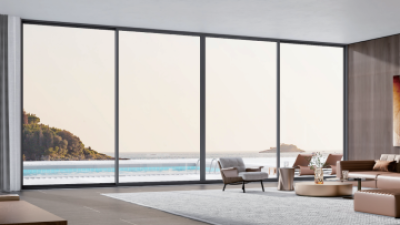
The 4048 Medium Slim Sliding Door combines smooth horizontal movement with an enhanced lifting function, creating a practical solution for wider openings without sacrificing visual clarity. Its platform-based design supports optimized cost and installation efficiency, while multifunctional profiles allow the same system to adapt to different architectural layouts. A narrower viewing width increases the glazed area and brings more daylight indoors, helping create a cleaner connection between interior and exterior spaces.
Energy performance remains an important consideration in modern envelope design. The International Energy Agency reports that buildings account for approximately 30% of global final energy consumption, making better-performing openings increasingly valuable (IEA, *Buildings 2023*). The U.S. Department of Energy also notes that windows can contribute around 25–30% of residential heating and cooling energy use. For the 4048 system, appropriate glazing, thermal breaks, weather seals, and carefully adjusted rollers can help reduce air leakage and improve everyday comfort.
Installation should begin with a structurally sound opening that is accurately measured, square, level, and plumb. The frame must be properly supported with compatible shims, perimeter flashing, and drainage provisions to manage water exposure. After securing the frame, installers should verify panel alignment, lifting operation, locking engagement, and uniform gasket compression. Final adjustments are essential for effortless movement and long-term reliability, particularly where large glass panels increase operating loads.
It should combine thermal performance, structural strength, water resistance, and durable surface protection. Thermal breaks reduce heat transfer through the frame. Multi-point hardware improves sealing. Powder-coated or anodized finishes resist moisture, salt, and scratches.
Thermal break doors usually provide better comfort in hot and cold climates. A polyamide separator limits heat transfer between aluminum profiles. Non-thermal break doors may suit mild climates, interiors, and budget-sensitive projects. They can become hot under strong afternoon sunlight.
Check the rollers, drainage paths, interlocks, threshold, and installation method. A poorly adjusted panel may scrape, rattle, or leak during heavy rain. Large glass areas can still reduce overall insulation. Sliding doors need careful testing.
Request verified reports covering air leakage, water resistance, wind load, and structural performance. Testing should match the target market and door style. Laboratories should have recognized accreditation. Paperwork matters.
Installation is almost as important as the door itself. An uneven frame can weaken seals and drainage. A beautiful door may leak after one rainy season. Small details matter.
No. Recycled content reduces energy use, but it does not prove product quality. Buyers should request evidence for recycled content, alloy designation, wall thickness, and finish durability. Claims need context. I would not trust a number without supporting documents.
Include opening dimensions, wind pressure, glazing weight, corrosion exposure, hardware cycles, and emergency access needs. Also confirm threshold height and replacement-part availability. Accessibility and water resistance may conflict. Compromise is sometimes necessary.
No. Low-emissivity glass helps, but the frame, seals, threshold, and installation also affect performance. A thermal break reduces frame heat transfer. A sealed drainage path helps manage moisture. The frame cannot solve every problem.
Ask for section drawings, sample testing, warranty conditions, and verified test reports. Review local climate data before approving the design. A polished catalogue can still overpromise. That deserves a second look.
In 2026, the Aluminum Alloy Door has become a versatile solution for residential, commercial, and industrial buildings worldwide. Its popularity comes from the balance of strength, corrosion resistance, low maintenance, design flexibility, and long service life. Global buyers can choose from hinged, sliding, folding, lift-and-slide, and entrance door systems, with performance shaped by profile design, glass configuration, seals, locks, hinges, and other hardware. Thermal break systems improve insulation, while non-thermal break doors may suit mild climates or interior applications.
Selecting the right system requires careful consideration of climate, building function, energy goals, security needs, and installation conditions. Cold or hot regions often benefit from insulated profiles and high-performance glazing, while sliding systems can maximize space and access. Buyers should also evaluate customization options, including dimensions, finishes, colors, glass types, ventilation, and accessibility features. Compliance with relevant international standards, local building codes, safety requirements, energy targets, and documentation procedures is essential for reliable sourcing and successful project delivery.