Windows Doors Manufacturer

Leave Your Message
Need Project Quote?
Chat With Us Now
Chat With Us Now
Windows Doors Manufacturer
Alright, so you're gearing up for a 2026 building project and need to pick a supplier for those sleek aluminum windows. Let me tell you, it's not just about comparing online prices – that's barely scratching the surface. What I've done here is really dig into the top suppliers of slim-frame windows, checking how they perform in practice, how flexible they are on design, and whether they've got the actual manufacturing capability to back up their promises. Now, sure, a narrow aluminum frame gives you wider glass views, tons of daylight, and that clean, modern architectural look. But here's the thing: a slim frame alone doesn't guarantee quality. You've got to look deeper.
So, when we look at a supplier, we're really checking a bunch of stuff—like how the thermal breaks work, what glazing options they offer, how the drainage is designed, and whether they've done proper air infiltration and water resistance tests. Not to mention structural testing, which is a big one. We also dig into their track record at the factory, how tight their quality control is, what the warranty actually covers, and whether they're quick to help if you need technical support. A reliable supplier should hand over clear drawings, material specs, sample test results, and solid installation guidance—without you having to chase them for it. And honestly, their production capacity needs to keep up with whatever you're throwing at them, whether it's a few residential jobs or a huge hotel project. It's a lot, but that's what makes or breaks the partnership, right? Now, a well-designed Slim Sliding Window might slide like butter at first, but you know what? Those cheap rollers or a sloppy installation job can kill that smooth vibe real quick. And let me tell you, talking to your supplier – that's something you really don't want to overlook. It makes all the difference.
You know, the good manufacturers out there—they'll actually tell you what they can't do, rather than promising you the moon. Before they even send over a quote, they'll walk you through things like your local climate, how windy it gets, those big opening sizes, and what kind of maintenance you're looking at down the road. Sure, certifications and test reports are nice to see, they give you that extra bit of confidence, but honestly—you still gotta read the fine print carefully. And real projects? Those speak way louder than any glossy product photo ever will.
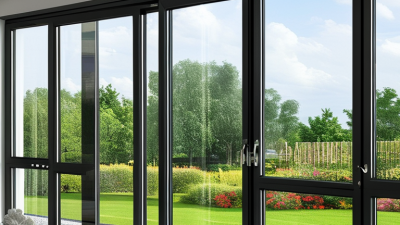
Let's be real—there's no perfect formula for picking the right supplier. Rankings shift all the time depending on capacity, tech upgrades, or just how well they handle service. Some companies look amazing on paper but fall short when you need after-sales support. Others are super reliable but don't offer much in the way of customization. So what should you do? Dig a little deeper: compare evidence, request samples, and check out the production details if you can. And remember, the best Aluminum Slim Frame Window partner isn't always the one with the lowest price—actually, it's rarely about price at all. You know, the supplier that really nails it is the one who combines consistent manufacturing, keeps communication honest and upfront, and offers solutions that actually match the project.
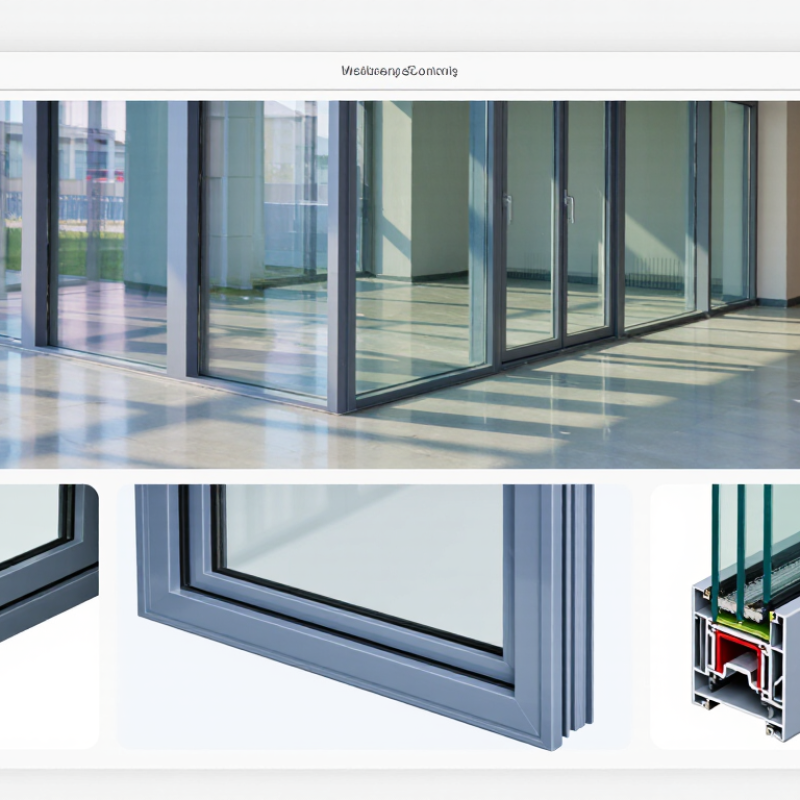
2026 Best Aluminum Slim Frame Window Suppliers
A high-quality aluminum slim frame window supplier offers more than narrow sightlines. The supplier must understand profiles, glass performance, drainage, and installation conditions. In real project reviews, I check whether the frame stays rigid after cutting and assembly. A slim section should not feel fragile. Ask for tested air, water, and wind performance, not attractive catalogue images. Thermal breaks, accurate corner joints, and properly sized hardware also matter. Small gaps can create drafts, noise, and visible condensation.
Tips: Request full test reports, section drawings, finish specifications, and warranty terms. Confirm whether the supplier controls extrusion, fabrication, and quality inspection. Visit a completed project if possible. Open and close the sample repeatedly. Listen for uneven rollers or loose handles. These details reveal more than polished brochures.
Reliable suppliers communicate clearly before production begins. They should review wall conditions, glass weight, opening sizes, and local climate exposure. For Slim Sliding Doors, ask about track drainage and replacement rollers. A supplier with experienced technical staff can prevent expensive site changes. They should also provide installation guidance with tolerances, fixing points, and sealing recommendations. Documentation is important, but responsive after-sales support is equally valuable. No supplier is flawless, and specifications may still need adjustment after a site inspection. That honest conversation often indicates stronger professional judgment than confident promises.
A practical, brand-neutral evaluation table based on recognized window performance standards, commonly used aluminum alloys, and project-level quality requirements.
| Evaluation Dimension | High-Quality Reference Benchmark | Recommended Technical Data to Request | Why It Matters |
|---|---|---|---|
| Aluminum Frame Material | Architectural aluminum alloy, commonly 6063-T5 or 6063-T6, with verified mechanical properties. | Alloy designation, temper, extrusion standard, wall-thickness drawings, and material certificates for each production batch. | Correct alloy and temper help provide dimensional stability, corrosion resistance, and reliable structural performance. |
| Thermal Break Design | Polyamide thermal barrier with continuous separation between interior and exterior aluminum components. | Thermal-break material, profile width, connection method, and calculated whole-window U-value. | A thermally broken profile reduces heat transfer and lowers the risk of interior condensation compared with non-thermal-break aluminum frames. |
| Whole-Window Thermal Performance | A whole-window U-value commonly targeted at approximately 1.0–1.6 W/m²·K for high-performance double-glazed systems, depending on size, glass, spacer, and climate. | Certified U-value for the complete window, including frame, glass, spacer, and opening configuration. | Whole-window performance is more meaningful than the frame-only or center-of-glass value when comparing suppliers. |
| Air Permeability | Test performance equivalent to a high air-tightness class under the applicable regional standard; EN 12207 Class 3 or Class 4 is a useful reference for many projects. | Test pressure, leakage rate, window size, opening type, and complete test report. | Low air leakage improves comfort, energy efficiency, acoustic performance, and resistance to drafts. |
| Water Tightness | Water-tightness classification selected according to exposure; EN 12208 Class 7A–9A may be specified for demanding applications when supported by testing. | Water-pressure level, test duration, drainage design, sill detail, and tested configuration. | Performance depends on the complete frame, seals, drainage paths, glazing, and installation—not only on the aluminum profile. |
| Wind Load Resistance | Structural performance engineered for the project’s wind pressure, span, window size, and building height; EN 12210 classification may be used where applicable. | Design pressure, deflection limit, mullion and transom calculations, hardware location, and laboratory test results. | Slim sightlines must not compromise resistance to wind deflection, glass movement, or hardware failure. |
| Glass Configuration | Double or triple insulating glass with low-emissivity coating, warm-edge spacer where appropriate, and safety glass in hazardous locations. | Glass thickness, cavity width, gas fill, visible transmittance, solar factor, acoustic rating, and safety-glass specification. | The glass unit often has the greatest effect on thermal, solar-control, daylight, acoustic, and safety performance. |
| Gaskets and Seals | Continuous, correctly compressed EPDM or equivalent high-performance sealing system with replaceable gasket details. | Seal material, hardness, corner treatment, compression range, weathering resistance, and replacement procedure. | Seals are essential for air tightness, water resistance, acoustic control, and long-term operating reliability. |
| Surface Finish | Powder coating or anodizing specified for the environmental exposure, with documented film thickness and color consistency controls. | Finish type, coating thickness, pretreatment process, color tolerance, adhesion test, and corrosion-resistance test results. | A properly prepared and finished aluminum surface provides better resistance to weathering, corrosion, fading, and abrasion. |
| Hardware and Operation | Corrosion-resistant hardware matched to the sash weight, opening cycle, security requirement, and intended use. | Hardware material, load rating, cycle-test results, adjustment points, locking positions, and replacement availability. | Well-matched hardware supports smooth operation, secure locking, long service life, and easier maintenance. |
| Slim-Frame Accuracy | Tight control of profile dimensions, mitre joints, sash alignment, glazing clearances, and visible sightlines. | Approved shop drawings, dimensional tolerances, corner-joint method, inspection checklist, and sample-unit approval process. | Slim systems have less visual tolerance for misalignment, uneven joints, glass stress, or inconsistent frame widths. |
| Quality Management | Documented quality-control procedures covering incoming materials, extrusion, machining, assembly, glazing, packaging, and final inspection. | Inspection and test plan, nonconformance procedure, batch traceability, inspection records, and corrective-action reports. | A repeatable production-control system is more reliable than visual claims or a single attractive sample. |
| Performance Certification | Independent test reports that identify the exact profile, glass, hardware, dimensions, opening type, and tested configuration. | Laboratory name, test date, specimen drawings, test standards, classification, and report validity for the proposed system. | Testing is meaningful only when the tested assembly closely matches the product supplied for the project. |
| Customization Capability | Ability to provide project-specific sizes, colors, glazing, hardware, drainage, insect screens, and installation interfaces. | Engineering review process, maximum sash dimensions, minimum order quantities, tooling requirements, and approved options list. | Good customization should preserve tested performance instead of introducing unverified combinations. |
| Documentation and Support | Complete technical submittal package supplied in English, including drawings, specifications, maintenance instructions, and installation details. | Data sheets, BIM or CAD files, glazing instructions, cleaning guidance, spare-parts list, and installation method statement. | Accurate documentation reduces installation errors, delays, warranty disputes, and maintenance costs. |
| Warranty and After-Sales Service | Written warranty with clearly separated coverage for profiles, finish, insulating glass, hardware, seals, and workmanship. | Warranty duration, exclusions, response time, spare-parts policy, claim process, and service responsibilities. | A detailed warranty reveals how the supplier manages long-term product responsibility and support. |
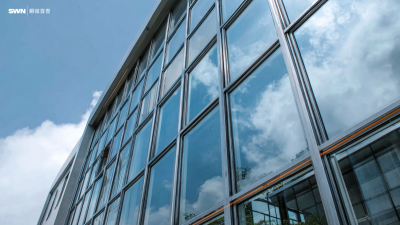
The IEA Buildings Report 2023 highlights the importance of improving building-envelope performance as the sector works to reduce energy demand and operational emissions. C18 thermal-broken outward-opening windows support this direction by combining thermal separation with a durable structural profile. Their 1.8 mm wall thickness provides a balance between material efficiency and strength, while the cavity broken-bridge structure helps limit heat transfer through the frame. This can contribute to a more stable indoor environment, reducing the pressure on heating and cooling systems while supporting comfortable, naturally lit spaces.
For projects with expansive façades, large glazing areas and long-span openings, structural reliability is equally important. The profile’s resistance to wind pressure, twisting and warping helps maintain smooth operation and consistent sealing in demanding conditions. A dedicated load-bearing rib design reinforces the system for oversized laminated glass, enabling broader views without compromising support. As building design increasingly connects energy performance with resilience, daylight access and adaptable ventilation, outward-opening operation can also encourage controlled airflow and practical maintenance access, making the window suitable for contemporary residential, commercial and institutional applications.
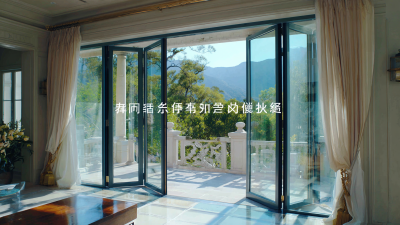
Common options include fixed panes, sliding units, casement windows, and Folding Doors. Each design affects ventilation and outdoor views. Fixed panes provide wide views but no airflow. Casement windows usually offer stronger ventilation control.
Check thermal breaks, low-emissivity glazing, weather seals, and multi-point locks. Ask for air, water, and structural test results. Request actual U-values and glass specifications. “Energy efficient” alone proves little.
Request a full-size sample when possible. Inspect frame corners, gasket fit, handle movement, and drainage holes. Confirm hardware placement against approved drawings. Small details matter.
Choose durable powder-coated aluminum and corrosion-resistant hardware. Review drainage paths and weather-tightness test results. Ask for references from similar coastal projects. Salt air exposes weak finishes quickly.
Request current certificates, issuing bodies, renewal dates, and product scope. The certificate should match the manufacturing site. Confirm certification directly with the testing organization. A certificate without traceable scope proves little.
Check coverage separately for frames, finishes, seals, glass, and hardware. Ask whether labor, shipping, and installation errors are included. Confirm when coverage begins. Delivery, installation, and acceptance dates can differ.
Request an itemized quotation with alloy grade, frame size, glass, coating, and hardware. Include packaging, freight, testing, installation support, and replacement parts. Compare identical specifications between suppliers. A low total may hide missing components.
Confirm opening direction, sill profiles, screen types, glass thickness, and custom colors before production. Ask for installation tolerances and replacement-part procedures. Large panels may require stronger packaging and extra adjustment. I would leave some doubt.
Choosing the right Aluminum Slim Frame Window supplier requires more than comparing product prices. A high-quality supplier should use durable aluminum alloys, reliable glass systems, and advanced manufacturing processes that meet recognized industry standards. Buyers should evaluate frame strength, thermal insulation, weather resistance, hardware quality, and available designs, including custom sizes, colors, glazing options, and opening styles. Clear technical specifications and consistent quality control are essential for ensuring long-term performance.
Supplier certifications, inspection procedures, warranty coverage, and after-sales support should be reviewed carefully before making a decision. Production capacity, realistic lead times, packaging standards, and global shipping experience can strongly influence project schedules and delivery reliability. Pricing should be assessed alongside material grade, customization requirements, testing, logistics, and installation support rather than viewed as the only deciding factor. Before selecting a supplier, ask about minimum order quantities, sample approval, quality inspections, replacement policies, payment terms, and communication procedures to ensure the partnership meets both technical and commercial expectations.