Windows Doors Manufacturer

Choosing an aluminum sliding window supplier? Yeah, it’s rarely as simple as picking whoever ranks first. A lot depends on where the building is, what it’s used for, how well the frames are fabricated, and how carefully they’re installed. A coastal villa is dealing with very different conditions than a high-rise apartment—and that difference really matters.
This guide looks at ten established suppliers: Reynaers Aluminium, Schüco, YKK AP, Kawneer, Aluk, Origin Global, Technal, Cortizo, Fleetwood, and JMA. We’re comparing things like thermal breaks, air and water resistance, hardware durability, glass compatibility, customization options, warranty support, and delivery capability. Brochures can be helpful, sure, but independent test data should carry more weight. Real projects tend to reveal the stuff catalogues conveniently leave out.
Dr. Joseph Lstiburek, a well-respected building-science expert, once said, “A perfect wall has to control rain, air, vapor, and heat.” That idea applies directly to modern aluminum sliding window systems. A narrow frame can look great, but weak drainage can turn into an expensive headache. Smooth rollers feel impressive in a showroom. Put them under heavy panels or skip maintenance, though, and they may not hold up.
No supplier wins every category. That’s the uncomfortable truth. Some companies have excellent engineering but limited regional service. Others offer competitive pricing with fewer tested configurations. So this intro is meant to give you a practical framework for evaluating both aluminum sliding window products and Aluminum Sliding Glass Doors. Before you decide, check certifications, project references, test reports, and whether your local installer actually knows what they’re doing. The strongest choice isn’t always the most famous brand. It’s the system that performs reliably in its actual environment.
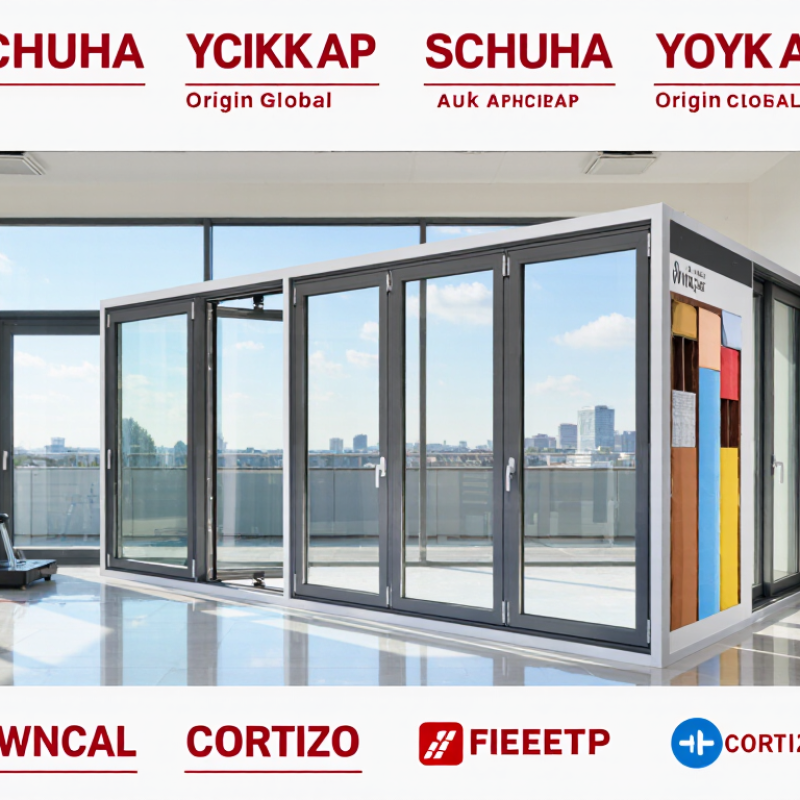
A high-quality aluminum sliding window supplier offers more than attractive profiles and smooth showroom samples. Their experience appears in practical details, such as stable rollers, accurate corner joints, and drainage channels that resist standing water. During project reviews, I look for suppliers who explain these features clearly instead of hiding behind technical language.
Reliable suppliers provide documented testing for air leakage, water penetration, wind resistance, and thermal performance. They should explain glass options, frame thickness, coating durability, and hardware maintenance. For coastal projects, corrosion-resistant finishes matter greatly. For large openings, structural calculations and reinforced tracks are essential. Aluminum Sliding Patio Doors also require careful attention to panel weight, locking points, and installation tolerances.
Communication reveals professional maturity. A dependable supplier confirms measurements, reviews drawings, and records changes before production. Their quality control should include factory inspections, sample approval, and final hardware checks. Clear warranties and accessible replacement parts add practical security. References from completed projects can support their claims, though references alone are not proof.
Some suppliers offer impressive customization but provide weak installation guidance. That gap can create leaks, binding panels, or uneven sightlines. I have found that honest suppliers admit limitations and suggest workable alternatives. They may not promise the lowest price. That is often reassuring. A thoughtful supplier also considers local climate, building movement, cleaning routines, and the installer’s skill level before recommending a system.
When comparing the 10 Best Aluminum Sliding Window Suppliers Worldwide, product quality should lead the evaluation. Experienced buyers inspect frame thickness, alloy grade, thermal breaks, drainage paths, and hardware durability. Aluminum Horizontal Sliding Windows should open smoothly without scraping or excessive movement. Ask for test reports covering air leakage, water resistance, wind pressure, and thermal performance. These records offer stronger evidence than attractive product photos.
A reliable manufacturer explains production capacity, quality-control procedures, packaging methods, and delivery timelines clearly. Check whether its testing follows recognized standards for the destination market. Review warranty terms carefully, including hardware coverage and response procedures. References from completed projects can reveal installation support and communication quality. No supplier looks perfect on paper. A missing detail may appear only after shipment, so written clarification matters.
Tips: Request physical samples, not only brochures. Compare corner joints under close inspection. Confirm replacement-part availability before ordering. Ask how damaged units are handled. A small pilot order may expose weaknesses early. Also evaluate technical drawings and revision control, because vague documentation can create costly site adjustments. Even a strong factory may struggle with local installation conditions, and this risk deserves honest consideration.
The aluminum sliding window market varies sharply by climate, building codes, and renovation habits. In North America, suppliers often emphasize thermal breaks, impact resistance, and tested air-water performance. Coastal projects demand corrosion-resistant finishes and carefully specified hardware. In Europe, slim frames, low U-values, and recyclable aluminum remain strong purchasing factors. Yet installation quality still decides many complaints. A premium frame cannot correct poor drainage.
East Asia favors compact sliding systems for apartments and dense urban buildings. Buyers commonly compare frame depth, glass thickness, rollers, and acoustic ratings. In Southeast Asia, ventilation, rain control, and powder-coating durability receive more attention than extreme thermal insulation. The Middle East requires shade-conscious designs, solar-control glass, and finishes that tolerate dust and intense sunlight. Some specifications look impressive on paper but perform poorly without proper sealing.
In Australia and New Zealand, wind-load calculations, water penetration testing, and bushfire considerations can influence product selection. Latin American markets often balance price, local fabrication, and replacement-part availability. African projects may prioritize robust tracks and simple maintenance where specialist service is limited. Worldwide, credible suppliers should provide test reports, installation guidance, warranty terms, and traceable material information. Ask for project references in similar climates. Small details matter. My assessment remains cautious: published ratings do not always reflect site conditions, installer skill, or years of use. Regional sourcing is useful, but independent verification remains necessary.
Profiles of Ten Leading Aluminum Sliding Window Suppliers
The global aluminum sliding window market rewards suppliers that combine thermal control, precise fabrication, and dependable delivery. A 2024 industry assessment by Grand View Research identifies construction growth and renovation demand as major market drivers. The International Aluminium Institute also reports that recycled aluminum can require up to 95% less energy than primary aluminum.
Ten supplier profiles show different strengths. Supplier One focuses on large commercial systems and reinforced tracks. Supplier Two serves high-rise projects with slim sightlines. Supplier Three offers thermally broken frames for colder regions. Supplier Four specializes in coastal finishes and corrosion resistance. Supplier Five supports residential renovations with standard-size units. Supplier Six provides oversized panels for hospitality projects. Supplier Seven emphasizes recycled billet and documented material traceability. Supplier Eight develops acoustic sliding systems near busy roads. Supplier Nine supplies fast-moving replacement parts and rollers. Supplier Ten delivers customized colors for architects and developers. These profiles are useful, but not perfect. Product claims still need independent testing.
Tips: Check U-value, air leakage, water resistance, hardware load ratings, and warranty coverage. Ask for test reports, not attractive samples. Confirm whether quoted performance applies to the complete window, including glass and installation. A lower frame price may create higher maintenance costs later. My practical concern is simple: many comparisons overlook replacement hardware. That small component can decide whether a sliding window remains smooth after years of daily use.
This chart presents an industry-oriented purchasing framework for comparing aluminum sliding window suppliers. Thermal performance, structural durability, weather resistance, customization, and compliance are commonly reviewed when assessing products for residential and commercial projects. The percentages represent evaluation weights rather than company market share or brand performance.
Choosing among the 10 Best Aluminum Sliding Window Suppliers Worldwide requires more than comparing catalog sizes.
Product range matters because projects may need two-track sliders, lift-and-slide systems, corner units, or narrow-frame options. The U.S. Department of Energy reports that windows can contribute significantly to residential heating and cooling losses. Therefore, suppliers should offer thermally broken frames, low-emissivity glazing, insulated spacers, and verified air-leakage data.
Customization separates capable manufacturers from simple resellers. Check maximum sash dimensions, glass thickness, hardware load ratings, drainage design, and available powder-coat finishes. A serious supplier should provide shop drawings, structural calculations, sample corners, and performance test results. The Window and Door Manufacturers Association and European testing standards emphasize air, water, and structural performance. Ask for the actual test class. Marketing language is not enough.
Acoustic ratings matter near airports or dense roads. Corrosion testing matters in coastal climates. Some suppliers still treat Old Aluminum Sliding Windows as a simple replacement job, but existing openings may be uneven by several millimeters. That detail can change the final order.
I would request a measured survey, glass configuration, and warranty exclusions before approval. Reports from Grand View Research indicate continuing growth in aluminum window demand, yet market growth does not guarantee equal engineering depth. Supplier comparison should remain evidence-based.
When comparing the 10 best aluminum sliding window suppliers worldwide, quality evidence matters more than polished catalogs. The International Energy Agency’s Buildings 2023 report states that buildings consume about 30% of global final energy. Therefore, suppliers should disclose U-values, air leakage, water resistance, and solar heat gain results. These figures reveal whether a slim aluminum frame performs beyond appearance.
Reliable manufacturers operate documented quality systems, usually certified to ISO 9001. The ISO Survey 2022 recorded more than one million ISO 9001 certificates globally, but certification alone is not proof of strong window production. Buyers should request current certificates, factory audit records, and batch traceability. Check the details. A certificate with an unsuitable scope deserves caution.
Testing should match the target market. European suppliers may reference EN 14351-1, while North American projects often require AAMA, WDMA, or CSA performance testing. Reports should cover structural pressure, forced-entry resistance, water penetration, air infiltration, and operating cycles. ISO 14001 can support environmental management, while ISO 45001 indicates structured occupational safety practices. However, recycled-content claims and powder-coating durability still require independent evidence. Factory visits can expose inconsistent seals, weak drainage channels, or manual assembly errors that paperwork misses. No supplier is perfect; even experienced manufacturers should explain failed tests and corrective actions openly.
Anonymous global supplier benchmark based on widely recognized aluminum-window standards, quality controls, testing requirements, and manufacturing practices.
| Rank | Supplier Market | Typical Product Strength | Relevant Quality Standards | Certification Evidence to Request | Manufacturing Practices | Recommended Verification |
|---|---|---|---|---|---|---|
| 01 | East Asia | High-volume residential and commercial sliding systems with thermally broken options. | ISO 9001; EN 14351-1; EN 12020-1 and EN 12020-2; ASTM B221 for extruded aluminum profiles. | Current ISO 9001 certificate, accredited laboratory reports, coating test records, and material traceability documents. | Automated extrusion, CNC machining, powder coating or anodizing, batch inspection, and controlled assembly lines. | Check air infiltration, water penetration, structural performance, thermal transmittance, and roller-cycle test results. |
| 02 | Western Europe | Energy-efficient systems designed for demanding weather, acoustic, and architectural applications. | EN 14351-1; EN 12207; EN 12208; EN 12210; EN ISO 10077-1; ISO 14001 where environmental management is required. | CE-related performance documentation, factory production-control records, and independently issued test reports. | Thermal-break assembly, automated gasket installation, documented process control, and closed-loop recycling of aluminum offcuts. | Confirm declared U-values, wind-load classification, acoustic rating, drainage design, and production-control procedures. |
| 03 | North America | Sliding Windows engineered for residential replacement, new construction, and regional climate requirements. | AAMA/WDMA/CSA 101/I.S.2/A440; ASTM E283; ASTM E331; ASTM E330; NFRC thermal-performance procedures. | Product certification listings, accredited performance reports, NFRC-related thermal data, and documented quality manuals. | Computerized cutting, reinforced corner assembly, air and water testing, barcode traceability, and final dimensional inspection. | Request AAMA/WDMA/CSA performance class, PG rating, design pressure, U-factor, solar heat-gain coefficient, and air-leakage data. |
| 04 | Southeast Asia | Corrosion-conscious systems suitable for humid, coastal, and tropical environments. | ISO 9001; ISO 9227 salt-spray testing; ASTM B117; EN 12207; EN 12208; applicable national building codes. | Coating certificates, salt-spray results, pretreatment records, batch numbers, and documented inspection plans. | Multi-stage pretreatment, powder coating or anodizing, stainless-steel hardware selection, sealed drainage channels, and humidity controls. | Verify coating thickness, adhesion, color consistency, corrosion resistance, drainage capacity, and hardware durability. |
| 05 | South Asia | Cost-competitive custom sizes with flexible fabrication for residential and mid-rise projects. | ISO 9001; ASTM B221; EN 14351-1; ASTM E283; ASTM E331; project-specific structural standards. | Factory audit reports, calibration certificates, aluminum alloy certificates, and independent product-test documentation. | CNC fabrication, manual and semi-automated assembly, incoming-material inspection, sample approval, and pre-shipment checks. | Audit dimensional tolerances, glass compatibility, corner strength, frame squareness, roller alignment, and packing quality. |
| 06 | Middle East | Large-format systems designed for intense sunlight, heat, dust, and high wind exposure. | ISO 9001; ASTM E330; ASTM E331; ASTM E283; ISO 4892 for accelerated weathering; local building regulations. | Structural-load reports, weathering results, coating specifications, quality certificates, and project reference documentation. | Heavy-duty profiles, reinforced mullions, high-performance seals, solar-resistant finishes, and project-based engineering reviews. | Confirm wind-load calculations, thermal expansion allowances, seal performance, coating durability, and oversized-panel handling limits. |
| 07 | Oceania | Systems adapted to high UV exposure, coastal corrosion, and strict residential building requirements. | AS 2047; AS/NZS 4666; AS/NZS 1170.2; ISO 9227; ISO 9001 where certified quality management is maintained. | Australian or New Zealand test reports, corrosion documentation, energy-performance data, and factory quality records. | UV-resistant finishes, corrosion-resistant hardware, water-management testing, controlled glazing, and documented installation guidance. | Check compliance with local wind zones, water resistance, bushfire requirements where relevant, thermal performance, and safety glazing provisions. |
| 08 | Eastern Europe | Value-oriented systems balancing thermal performance, standardized components, and European compliance. | EN 14351-1; EN 12207; EN 12208; EN 12210; EN ISO 10077-1; ISO 9001. | Factory production-control documentation, accredited test reports, CE technical files, and coating-process records. | Standardized profile systems, semi-automated machining, barcode-based production tracking, and batch-level inspection. | Review declared performance, profile alloy, thermal-break geometry, gasket compatibility, and conformity of technical documentation. |
| 09 | Latin America | Adaptable systems for varied climates, local construction methods, and medium-volume project requirements. | ISO 9001; ASTM B221; ASTM E283; ASTM E331; regional structural and energy-efficiency requirements. | Local compliance reports, material certificates, coating test results, calibration records, and documented corrective-action procedures. | Flexible tooling, local engineering support, manual quality gates, corrosion-resistant finishing, and made-to-order fabrication. | Validate regional wind and rain performance, installation tolerances, replacement-hardware availability, and after-sales support capability. |
| 10 | Africa | Durable, practical sliding windows for hot climates, urban developments, and infrastructure projects. | ISO 9001; ASTM B221; ASTM E330; ASTM E331; ISO 9227; applicable national and project specifications. | Independent test reports, quality-management documentation, alloy certificates, coating records, and supplier audit evidence. | Robust profile selection, corrosion-resistant finishing, manual and CNC fabrication, sample-based inspection, and protective export packaging. | Assess resistance to dust, heat, wind, and moisture; verify spare-parts support, installation training, and long-term maintenance requirements. |
Comparing ten global suppliers requires more than checking the quoted unit price. Ask each supplier for a detailed offer covering profiles, glass, hardware, packaging, and inspection fees. Aluminum Vertical Sliding Windows may look similar, yet frame thickness and hardware quality can change the final cost. Request sample specifications and confirm whether prices include export packing and local delivery. A low quote can still become expensive after revisions, damaged goods, or missing accessories.
Logistics deserves careful measurement. Compare production time, port distance, shipping terms, and estimated customs paperwork. Ask for carton dimensions, loading quantities, and replacement procedures for transit damage. Reliable suppliers should provide inspection records, installation guidance, and clear communication during shipment. After-sales support should include response times, spare-part availability, warranty conditions, and technical drawings. Vague promises are difficult to use when a project is already delayed.
Tips: Build a comparison sheet with identical specifications. Record every excluded cost. Check recent project references, not only polished testimonials. Ask who handles claims after delivery. Video calls can reveal warehouse organization, but they are not perfect proof. I would also test one small order before committing to a large contract. That extra step may feel inefficient, yet it exposes packaging weaknesses and communication gaps early. Some buyers focus heavily on price and regret ignoring the service process.
A reliable supplier explains practical details clearly.
Request documented tests for air leakage, water penetration, wind resistance, and thermal performance.
Check maximum sash size, glass thickness, hardware load ratings, and drainage design.
Thermally broken frames can reduce heat transfer through aluminum profiles.
Choose corrosion-resistant finishes and request relevant durability information.
Large panels need structural calculations, reinforced tracks, and suitable hardware.
Useful support includes shop drawings, measured surveys, BIM files, and clear maintenance instructions.
Existing openings may be uneven by several millimeters.
Review factory inspections, sample approvals, final hardware checks, warranties, and replacement-part access.
Choosing the right Aluminum Sliding Window supplier requires more than comparing product images or initial prices. A high-quality manufacturer should demonstrate reliable material selection, precise fabrication, smooth operating performance, strong weather resistance, and consistent quality control. Buyers should evaluate suppliers by their engineering expertise, production capacity, customization options, testing procedures, certifications, and ability to meet regional building requirements. Market conditions also vary across regions, making it important to consider climate, construction standards, delivery infrastructure, and local installation practices.
This guide reviews ten leading types of global suppliers without focusing on any specific brand, comparing their product ranges, design flexibility, technical capabilities, manufacturing methods, and quality assurance systems. It also explains how to assess quotations by looking beyond unit cost to include tooling, packaging, shipping, lead times, installation support, warranty terms, spare parts, and communication efficiency. A well-rounded evaluation helps buyers select a dependable partner that can deliver durable windows, predictable logistics, responsive after-sales service, and long-term value for residential or commercial projects.