Leave Your Message
Submit Message
Call: +8618927207770
Email: sales1@civowindows.com
WhatsApp Live Chat
Need Project Quote?
Chat With Us Now
0%

Picking an aluminum impact window isn’t just about which frame color looks best or which brand brags the loudest about strength. If you live near the coast, those windows have to deal with a lot — wind-driven rain, flying debris, and years of slamming open and shut. And honestly, the whole system matters: glass, frame, seals, hardware, even how it’s installed. You can have a super tough window, but if one connection is weak, it can all fall apart. So yeah, details really count.

So here's the thing about hurricane safety: Dr. David O. Prevatt, who studies wind engineering, keeps making a pretty practical point. It's not just about the glass. What really matters is the whole building opening—how everything works together. Or, to put it in his words without quoting him exactly: you've got to evaluate the entire tested assembly, not just one component. And honestly, that distinction makes a big difference when you're comparing manufacturers. So here's the thing—if you're a buyer, you really need to dig into the test docs for the specific product you're eyeing. Check which sizes and configs they actually tested, and don't forget to ask how installation might mess with those performance numbers. Sure, a lot of claims sound the same on paper. But the evidence? That's where things can fall apart.

Alright, so this guide rounds up China's top 10 aluminum impact window makers. Think of it as a solid starting point—definitely not a replacement for doing your own homework on specific projects. We looked at things like product range, how they manufacture, test documentation, customization options, service, and export track record. And hey, it also touches on related products—like impact sliding glass doors, for instance. Those are one of those things where you really want to keep an eye on the roller system, track drainage, and locking points. A glossy brochure is nice and all, but honestly, it can’t answer every question you’ve got. So ask for clear specs, get the warranty terms in writing, and make sure you’re comparing apples to apples. To be honest, there are some details you just can't fully verify from public info—and that's a limitation we should own up to, not hide. The right call really depends on the building, the exposure, and the people doing the install. Rankings are helpful, but they're not the whole story.
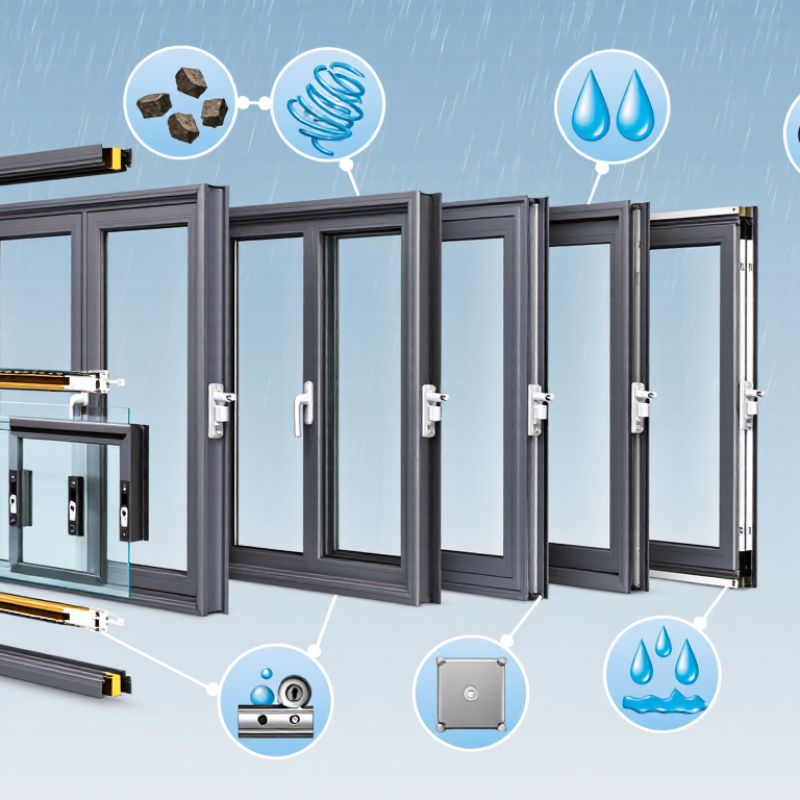
China Top 10 Aluminum Impact Window Manufacturers

What Defines an Aluminum Impact Window?

An aluminum impact window is a tested assembly, not simply thick glass set inside a metal frame. Its laminated glass uses a strong interlayer that helps hold broken pieces together after impact. The aluminum frame supports the glass and transfers loads to the building structure. Glass, frame, locks, joints, and anchors must work as a system. Details matter.

Tips: Ask for test documentation for the complete window assembly, not just the glass. Check frame depth, locking points, and installation requirements. A sample corner can reveal uneven joints or flimsy hardware. Small details count.

Performance also depends on correct installation and regular care. Anchors must match the wall and follow the product’s specified spacing. Poor installation can undermine a well-tested window. Coastal air can also wear finishes and hardware over time, so inspect seals and drainage paths for dirt or standing water. No single label tells the whole story; compare the documented ratings with the opening size and conditions where the window will be used. Even experienced buyers can miss that match.

How Aluminum Impact Windows Are Designed and Tested

China Top 10 Aluminum Impact Window Manufacturers

How Aluminum Impact Windows Are Designed and Tested

Design begins with the whole window assembly, not just its glass. Aluminum frames need reinforced corners, secure hardware, and anchors suited to the surrounding wall. Laminated glass typically uses bonded layers that help hold fragments together after breakage. Frame depth, glass thickness, and mullion spacing all affect performance. A heavy frame alone proves little.

Testing evaluates the complete unit under controlled conditions. Impact tests strike the glazing with a specified object, then pressure cycles check whether the assembly remains intact and resists air or water intrusion. Test results apply to the tested size and configuration, so changing glass, frame details, or installation methods can alter performance. There is no perfect test setup; real buildings have different openings and exposure. Manufacturers should provide clear test documentation and installation instructions.

Tips: Check that reports match the window configuration you plan to buy. Ask how the frame is anchored, and inspect corner joints and drainage paths. Small details matter. Don’t assume a passing glass test verifies the entire installed window.

China’s Aluminum Impact Window Manufacturing Landscape

China’s aluminum impact window manufacturing landscape includes large production facilities, specialized fabricators, and suppliers serving residential and commercial projects. Capabilities differ: some focus on custom dimensions, while others prioritize repeatable production and shorter lead times. Coastal industrial regions offer established supply networks, but location alone does not prove quality. Ask how materials, assembly, and inspection are controlled.

For Casement Impact Windows, assess the complete unit, not just the aluminum profile. Laminated glass, reinforced corners, locking hardware, and compression seals must work together. Request test documentation for the exact configuration you plan to buy, including its size and glazing. Small changes can affect performance. That detail is easy to miss. Compare frame finish, drainage design, hardware availability, and replacement-part support, too. A polished sample may not reveal how consistently a factory handles larger production runs.

Tips: Share opening dimensions, exposure conditions, and finish requirements before requesting a quote. Ask for a sample and production photos. Then verify that the quoted specifications match the test documents. One trade-off remains: customization can improve fit, but it may extend delivery time.

How to Evaluate Chinese Impact Window Manufacturers

A reliable evaluation starts with test evidence, not a polished catalogue. Ask for complete reports covering the exact frame, glass, hardware, and anchoring system you plan to buy. ASTM E1886 and E1996 test impact resistance and performance under cyclic pressure; a report for a similar model is not proof that your selected configuration passed. Check tested dimensions, glass thickness, mullions, and installation details. Small changes matter.

Review factory quality controls as carefully as product claims. Request production inspection records, traceable material specifications, and documented checks for sealant, drainage paths, and hardware operation. For Sliding Impact Windows, inspect how rollers move and whether the sash locks evenly; a brief showroom demonstration cannot reveal long-term wear. Also compare independently verified U-factor and solar heat gain coefficient values. The U.S. Department of Energy’s Energy Saver guidance estimates that windows account for 25%–30% of residential heating and cooling energy use. Paperwork can look reassuring. Verify it. I would not treat a certificate as a substitute for checking that the tested product matches the delivered one. Ask how defects are recorded and corrected, then review a recent batch inspection rather than relying on a verbal promise.

China Top 10 Aluminum Impact Window Manufacturers - How to Evaluate Chinese Impact Window Manufacturers

Use this evidence-based scorecard to compare up to 10 suppliers. It lists evaluation criteria rather than ranking or making claims about specific manufacturers. Confirm that test reports and approvals apply to the exact window configuration and the building code for your project.

Evaluation criterion Suggested weight What to verify Useful evidence
Product testing and approvals 15% Check that impact and performance testing covers the quoted model, size, glazing, frame, and hardware. Confirm the test method and approval are accepted in the destination market. Complete test reports; applicable listings or approvals; report number, issuing laboratory, test date, and scope. ASTM E1886/E1996 may be relevant where required by the project code.
Impact-resistant glazing 10% Confirm the glass make-up, interlayer, thickness, pane arrangement, and permitted dimensions. Verify that the tested glazing is the one specified for the window system. Glazing schedule; glass and interlayer product documentation; impact-test report identifying the glazing configuration; documented size limits.
Design pressure and structural performance 12% Compare the product’s rated pressure and tested sizes with project wind-load requirements. Confirm design assumptions, mullions, anchorage, and allowable configurations. Stamped calculations where required; performance reports; installation and anchorage details; a written schedule matching each opening size to the approved product configuration.
Air leakage and water penetration 10% Review tested air and water performance, including the test pressure and specimen configuration. Select performance levels to suit the project and local requirements. Laboratory reports referencing applicable methods, such as ASTM E283 for air leakage and ASTM E547 or ASTM E331 for water penetration, where specified.
Aluminum alloy, temper, and profiles 10% Request the alloy and temper, profile drawings, wall thicknesses, and finish specification. Check that the supplied profiles match the tested and approved system. Material certificates or traceability records; dated section drawings; profile and finish specifications; incoming-material inspection records.
Fabrication quality and process control 8% Assess dimensional control, corner assembly, drainage, sealing, hardware installation, inspection procedures, and traceability of finished units. Quality procedures; inspection checklists; calibration records; sample-unit inspection; corrective-action records. An ISO 9001 certificate supports quality-system review but does not certify window performance.
Hardware and corrosion resistance 8% Check hardware materials, operating cycle requirements, locking points, replaceability, and suitability for the intended coastal or humid environment. Hardware specifications; corrosion-test documentation where required; operating and maintenance instructions; spare-parts list.
Thermal and energy documentation 7% Compare whole-window U-factor and solar heat gain coefficient (SHGC) for the proposed glazing and frame. Check whether the values meet local energy-code requirements. NFRC-certified ratings or accepted simulation/testing documentation, as applicable; glazing options and the exact product configuration used for the rating.
Warranty and after-sales support 6% Review coverage, exclusions, claim process, remedy, and responsibility for glass, finish, hardware, and installation-related issues. Written warranty in the contract language; service contact and response process; availability and lead time for replacement parts.
Export readiness and project documentation 6% Confirm the supplier can provide accurate shop drawings, packaging details, installation guidance, and shipment documents for the destination market. Project references that can be independently checked; sample submittal package; packing list and labeling plan; agreed production and delivery schedule.
Total suggested weighting 100% Score each supplier against the same project requirements and retain the supporting evidence for every score.

Note: Standards, approvals, and code requirements vary by market and project. Verify current editions, acceptance by the authority having jurisdiction, and the scope of each report before placing an order.

Profiles of China’s Top 10 Aluminum Impact Window Manufacturers

Profiles of China’s Top 10 Aluminum Impact Window Manufacturers

These profiles compare manufacturers by engineering focus, production capability, and quality controls—not by unsupported sales rankings. The International Aluminium Institute reported roughly 42 million tonnes of primary aluminum production in China in 2023. That scale supports a broad supplier base, but raw material output alone does not prove window performance. Important distinction.

Some manufacturers emphasize integrated production, from aluminum extrusion to finished frames. Others focus on coastal projects, custom dimensions, or impact-resistant glazing systems. When reviewing a profile, check whether the supplier documents frame specifications, hardware options, coating processes, and product testing. Ask how it verifies air leakage, water resistance, and structural performance for the project’s conditions. A polished catalogue is not enough.

The ten profiles should also show how design choices affect use. Thermal breaks can limit heat transfer; multi-point locks can improve sash compression. For Casement Window Aluminum systems, inspect hinge strength, seal continuity, and smooth operation after repeated opening. The UNEP Global Status Report for Buildings and Construction 2024 states that buildings and construction used 32% of global energy in 2022. That makes material efficiency relevant, though it does not establish a window’s energy rating. Supplier disclosures vary. That gap deserves scrutiny.

Comparing Product Ranges, Certifications, and Export Capabilities

China’s top-ten aluminum impact-window comparison should begin with evidence, not catalog breadth. Compare sliding, casement, and fixed units, including compatible frames, glazing, and hardware. Ask whether tested assemblies match the quoted glass thickness, opening size, mullions, and anchorage. ASTM E1886 and E1996 address impact resistance and cyclic pressure, but a test report may cover only specific configurations. Details matter. Request full laboratory reports and check their scope against the exact order. Air, water, structural, and thermal performance also deserve attention.

Export capability is more than a port address. Compare protective packing, container-loading plans, spare-part labels, lead-time records, and procedures for transit damage. The International Aluminium Institute reported 70.6 million tonnes of primary aluminum production in 2023, but abundant raw material does not guarantee consistent window profiles or finishes. UNCTAD’s Review of Maritime Transport 2024 reported maritime trade growth of 2.4% in 2023, a reminder that delivery plans depend on changing logistics. Searches for Aluminum Window & Door Manufacturer in Global should be checked against destination-specific references and after-sales response. One limitation remains: polished brochures rarely describe failures, yet those details can reveal how a supplier handles real projects.

120 System Thermal-Break Sliding Window: Design, Performance, and Everyday Benefits

The 120 System Thermal-Break Sliding Window combines a streamlined profile with practical performance for everyday spaces. Its 65mm visible surface creates a medium-narrow frame appearance, allowing more of the window opening to remain visually prominent while keeping the overall design balanced. The thermal-break construction separates the inner and outer parts of the frame, helping reduce heat transfer and support a more comfortable indoor environment through changing seasons. Smooth sliding operation also makes the window a convenient choice where opening space is limited.

Designed with adaptable use in mind, the window’s lock can be configured with accessories such as handrails, guardrails, and drying racks. This multifunctional approach helps accommodate different layouts and household needs, from added support and safety features to a practical place for drying items. Together, the narrow visible profile, thermal-break design, and accessory flexibility make the 120 System a considered option for projects seeking a clean appearance and useful everyday performance.

FAQS

What defines an aluminum impact window?

It is a tested assembly, not just thick glass in a metal frame. Laminated glass, frame, locks, joints, and anchors must work together. Small details count.

Why does the frame matter?

The aluminum frame supports the glass and transfers loads to the building structure. Check frame depth, locking points, and joint quality.

What documents should buyers request?

Ask for full test reports covering the complete window assembly. Confirm that the tested glass thickness, opening size, mullions, and anchorage match the order.

What do ASTM E1886 and E1996 cover?

They address impact resistance and cyclic pressure. A report may cover only certain configurations, so check its scope carefully.

Which other performance ratings matter?

Compare air, water, structural, and thermal performance. Match documented ratings to the opening size and site conditions. It is easy to miss this.

How can installation affect performance?

Anchors must suit the wall and follow specified spacing. Poor installation can weaken the performance of a tested window.

What maintenance is useful in coastal areas?

Inspect seals, hardware, and drainage paths for dirt or standing water. Coastal air can wear finishes over time. Check them regularly.

What should buyers check about shipping and export support?

Review protective packing, container-loading plans, spare-part labels, lead-time records, and transit-damage procedures. A port address alone proves little.

How can a buyer assess a supplier beyond its brochure?

Check destination-specific project references and after-sales response. Ask how past problems were handled. Polished brochures can leave important gaps.

Conclusion

This article explores what defines an Aluminum Impact Window, including its materials, construction, and role in helping buildings withstand severe weather. It explains how these windows are designed and tested, highlighting factors such as frame strength, glass configuration, hardware, sealing, and overall performance. The overview also introduces China’s aluminum window manufacturing landscape and the range of production capabilities available to international buyers.

Readers will find practical guidance for evaluating manufacturers, from reviewing product specifications and quality-control processes to assessing certifications, customization options, communication, and export experience. Profiles of ten manufacturers provide a structured view of the industry without focusing on brand promotion. A final comparison of product ranges, certifications, and export capabilities helps buyers identify which suppliers may best match their project requirements and make more informed sourcing decisions.

Liam

Liam

Liam is a dedicated marketing professional at Foshan Xio Technology Co., Ltd., where he leverages his extensive knowledge of the company's products to enhance brand visibility and customer engagement. With a deep understanding of cutting-edge technology solutions, Liam plays a pivotal role in......
Previous 2026 Best Aluminum Slim Frame Window Suppliers