Windows Doors Manufacturer

Leave Your Message
Need Project Quote?
Chat With Us Now
Chat With Us Now
Windows Doors Manufacturer
Aluminum Fixed Windows might not be the flashiest part of a modern building envelope, but they’re doing some pretty important work. They bring in steady daylight, keep sightlines slim, and don’t rely on much moving hardware. According to the International Energy Agency’s 2024 Aluminium report, aluminum production accounts for roughly 3% of global carbon dioxide emissions. That’s not a tiny number. So recycled content and responsible sourcing aren’t just marketing talk — they also make supplier selection a technically serious decision.
The Global Status Report for Buildings and Construction 2024 says buildings use about 32% of global energy. They also produce nearly 34% of global carbon dioxide emissions. A well-designed Fixed Glass Window can help with daylighting and cut down on maintenance. But it can’t fix poor insulation, weak installation, or the wrong glass. Frame depth, thermal breaks, glazing thickness, solar-control coatings, and drainage details really need to be reviewed together. Standards like EN 14351-1 and AAMA/WDMA/CSA 101/I.S.2/A440 help verify air, water, structural, and thermal performance.
This Top 10 comparison looks at manufacturers including YKK AP, Schüco, Reynaers Aluminium, Kawneer, TECHNAL, Aluprof, Pella, JELD-WEN, Andersen, and TOSTEM. We considered manufacturing reach, product engineering, certification evidence, project experience, and after-sales support. But names alone aren’t enough. No ranking is perfectly universal. Regional climate, installer skill, testing methods, and project budgets can all change the result. That limitation deserves attention. A polished catalog can still hide inconsistent lead times or unclear warranty terms. So this guide uses published technical information, professional reports, and practical purchasing criteria. It aims to help architects, contractors, and buyers compare aluminum window suppliers with a bit more confidence. Some conclusions may still be debatable, but transparent criteria are more useful than exaggerated claims.
What Are Aluminum Fixed Windows?
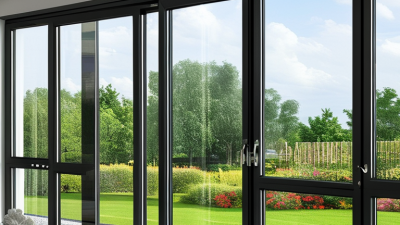
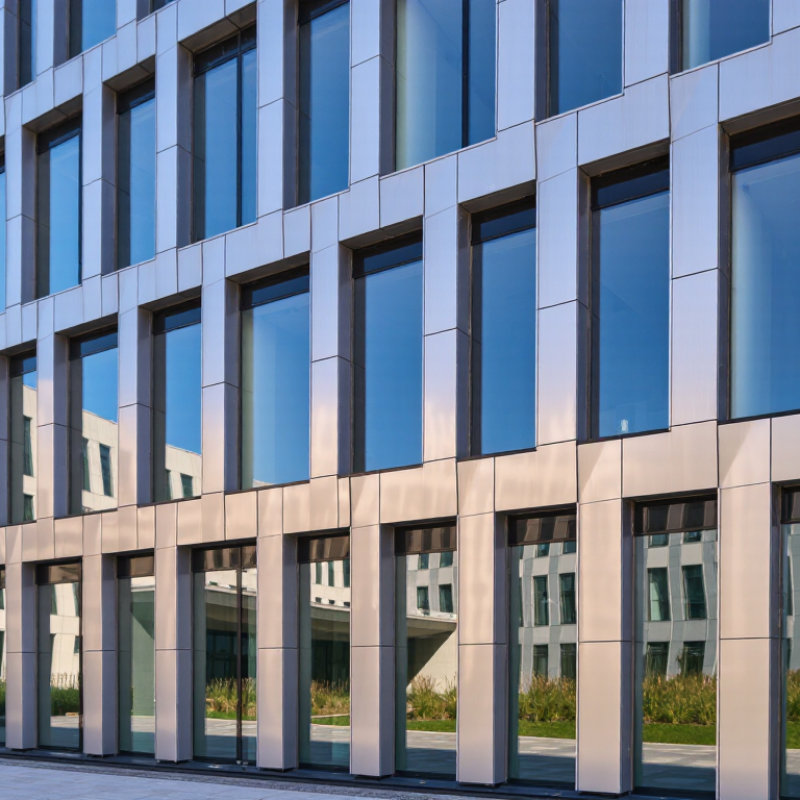
Aluminum fixed windows are non-operable windows designed to admit daylight and provide clear outdoor views. Unlike casement or Sliding Windows, they do not open for ventilation. Their sealed structure usually includes an aluminum frame, glass panel, gaskets, and drainage details.
Aluminum offers strength, slim sightlines, and consistent dimensional stability. It resists warping and supports large glass areas, which makes it useful in homes, offices, and public buildings. Thermal-break systems can reduce heat transfer through the frame. Low-emissivity glass may improve inDoor Comfort and energy performance. However, frame quality alone does not guarantee good results. Poor installation can cause air leakage, water entry, or uneven pressure on the glass. I have seen attractive designs fail because the sill was not correctly leveled.
Tips: Check the frame depth, glass specification, thermal-break design, and drainage path. Ask manufacturers for test data covering air, water, and wind performance. Confirm that the window suits the local climate and wall system. A fixed window still needs careful sealing. It is not maintenance-free.
When comparing the top 10 aluminum fixed window manufacturers worldwide, buyers should examine manufacturing experience, quality controls, warranty terms, and project references. Reliable suppliers should explain performance limits clearly, rather than promise that one window fits every building. Small details matter. A narrow frame may look elegant, but its thermal and structural performance requires verification.
| No. | Evaluation Dimension | Verified Industry Fact or Benchmark | Why It Matters for a Fixed Window |
|---|---|---|---|
| 1 | Window Type | A fixed window is a non-operable window that does not open and is designed primarily to admit daylight and provide an unobstructed view. | The absence of moving sashes generally simplifies the hardware design and can improve air tightness compared with operable window types. |
| 2 | Frame Material | Aluminum is a lightweight, corrosion-resistant metal commonly used for window frames because it offers high strength relative to its weight and can be extruded into precise profiles. | Profile geometry can be optimized for large glazing areas, narrow sightlines, and structural stability. |
| 3 | Thermal Break Design | Thermally broken aluminum frames use a low-conductivity separator between the interior and exterior aluminum sections to reduce heat transfer. | Thermal breaks help reduce interior surface condensation risk and improve the overall thermal performance of the window assembly. |
| 4 | Glazing Options | Common configurations include single, double, and triple glazing. Insulating glass units typically use sealed cavities, often filled with air or inert gas such as argon. | Glass selection affects heat gain, heat loss, daylight transmission, solar control, safety, and acoustic performance. |
| 5 | Glass Safety | Tempered glass is heat-treated to increase strength and designed to break into smaller granular fragments. Laminated glass holds together after breakage because of an interlayer. | Safety glazing may be required in locations exposed to human impact, near doors, or in other hazardous areas, depending on local codes. |
| 6 | Air, Water, and Structural Testing | Performance testing commonly evaluates air leakage, water penetration resistance, and structural pressure resistance under recognized regional standards. | Testing helps verify whether a fixed window can withstand wind loads and resist unwanted air and water infiltration in its intended location. |
| 7 | Thermal Performance Metric | U-factor measures heat transfer through a window assembly; lower U-factor values indicate better insulating performance. Solar heat gain coefficient describes the fraction of incident solar radiation admitted through the window. | Using both metrics supports climate-appropriate selection rather than judging performance from frame material alone. |
| 8 | Surface Finish | Common aluminum finishes include anodizing and powder coating. Anodizing creates a controlled oxide layer, while powder coating applies a cured polymer-based coating. | The finish influences appearance, color selection, weathering resistance, maintenance requirements, and compatibility with the project environment. |
| 9 | Air and Water Sealing | Fixed window assemblies typically rely on perimeter gaskets, sealants, glazing beads, drainage paths, and carefully designed frame joints. | Correct sealing and installation are essential because even a high-performance frame can underperform if joints or interfaces are poorly executed. |
| 10 | Sustainability and Recyclability | Aluminum can be recycled repeatedly without losing its fundamental material properties, although collection, separation, and remelting processes require energy and infrastructure. | Recyclability can support circular-material strategies when the frame, glass, coatings, and sealants are managed appropriately at the end of service life. |
Note: Actual window performance depends on the complete tested assembly, glass specification, dimensions, installation method, climate, and applicable building codes.
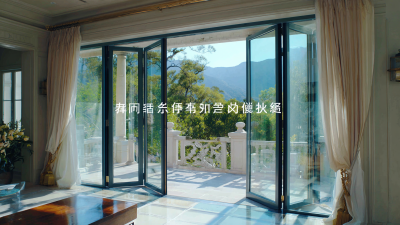
Thermal-broken suspension sliding windows are designed for expansive openings where daylight, ventilation, and structural performance must work together. A reinforced frame carries the sash through a suspension-based sliding system, while a polyamide thermal barrier reduces heat transfer between the interior and exterior aluminum sections. This combination supports panoramic glazing and smooth operation without sacrificing the clean, contemporary appearance often required in medium- and high-rise buildings. The U.S. Department of Energy notes that windows can account for approximately 25–30% of residential heating and cooling energy use, making frame insulation and glass selection important design decisions.
For large bays, buyers should examine the complete system rather than the appearance alone. Key specifications include frame U-factor, solar heat gain coefficient, air leakage, water penetration, wind-load resistance, and tested sash weight capacity. Low-emissivity double or triple glazing, warm-edge spacers, multi-point locking, and properly engineered drainage can improve comfort and durability. Performance should be supported by independent testing against recognized fenestration standards, with project-specific wind calculations for elevated installations.
The International Energy Agency’s 2023 buildings report identifies building operations as responsible for about 30% of global final energy consumption, reinforcing the value of efficient envelopes. When comparing panoramic sliding windows, confirm thermal-break continuity at corners and meeting rails, verify hardware serviceability, and request documented performance ratings. A well-selected high-load-bearing system can provide generous views, controlled ventilation, and reliable everyday movement while meeting the practical demands of large openings.
Selection should rely on verified evidence, not advertising claims. Review thermal tests, air resistance, water resistance, structural safety, and production consistency. Check test dates, laboratory details, profile specifications, and warranty terms. Evidence can still be incomplete.
Thermally broken frames reduce heat transfer between indoor and outdoor surfaces. Multi-chamber profiles can improve insulation without making frames look bulky. Low-emissivity glass, argon-filled cavities, and warm-edge spacers may improve comfort. Small details matter.
Request a complete performance dossier from the manufacturer. It should include U-values, glass details, test results, laboratory information, and warranty conditions. Confirm that the reported U-value matches the exact glass package. Do not rely on a profile sample alone.
Ask for testing against water penetration, air infiltration, wind pressure, and repeated opening cycles. Inspect corner joints, drainage paths, gaskets, and frame connections. A full-size sample reveals more than a small profile piece. Testing is never perfect.
No. Modern equipment may look impressive while custom sizes still cause delays. Ask about production records, peak-season capacity, quality checks, and completed projects. Verified delivery history matters more than growth forecasts.
They suit living rooms, offices, schools, stairwells, corridors, curtain walls, and retail spaces. A large living-room unit can frame a wide outdoor view. Textured glass may provide privacy in bathrooms. Different buildings require different specifications.
Installation can change the final performance significantly. Incorrect measurements may create uneven joints, water leakage, or pressure on the glass. Check the wall opening before production begins. Attractive drawings do not guarantee a successful installation.
Confirm replacement-part availability, maintenance access, coating durability, and hardware compatibility. Coastal buildings may need more protective finishes against salty air. Review local climate and wall construction carefully. My comparison may still be imperfect.
This article provides a practical overview of the global Aluminum Fixed Window market, beginning with a clear explanation of what these non-operable window systems are and how their frames, glazing, seals, and thermal components work together. It also explains the criteria used to select the top 10 manufacturers worldwide, including product quality, engineering capability, production consistency, energy performance, customization options, certifications, and international service capacity.
The article then presents neutral profiles of leading manufacturers without focusing on brand promotion, highlighting their production strengths, design approaches, and market coverage. It reviews key technologies and product features such as thermal breaks, insulated glass, weather resistance, structural durability, acoustic performance, and slim-frame designs. Finally, it examines how Aluminum Fixed Window systems are applied in residential and commercial buildings, including homes, offices, hotels, schools, retail spaces, and high-rise developments, where natural light, energy efficiency, low maintenance, and architectural flexibility are important considerations.