An aluminum minimalist window can really brighten up a room—without completely losing that sleek, frames-only look you might be after. Those narrow sightlines are perfect for opening up the view, and because aluminum is so tough and durable, it’s great for larger glazed sections. According to the U.S. Department of Energy’s Energy Saver suggestions, windows make up about 25 to 30% of the energy used for heating and cooling in homes. Now, that number isn’t specific to aluminum windows, but it just highlights why paying attention to glass area, frame design, and how everything is installed really matters.
You know Ludwig Mies van der Rohe’s famous “Less is more” mantra? It’s a great way to think about minimalist design — but keep in mind, it’s more of a guiding idea than a promise that a window will perform perfectly. When you’re choosing, ask yourself if slim profiles will actually work with the right thermal breaks, proper glazing, and weather seals. For example, a casement aluminum window can be a good pick if you want more control over ventilation, but don’t forget that hardware and the space needed for opening are still important factors.
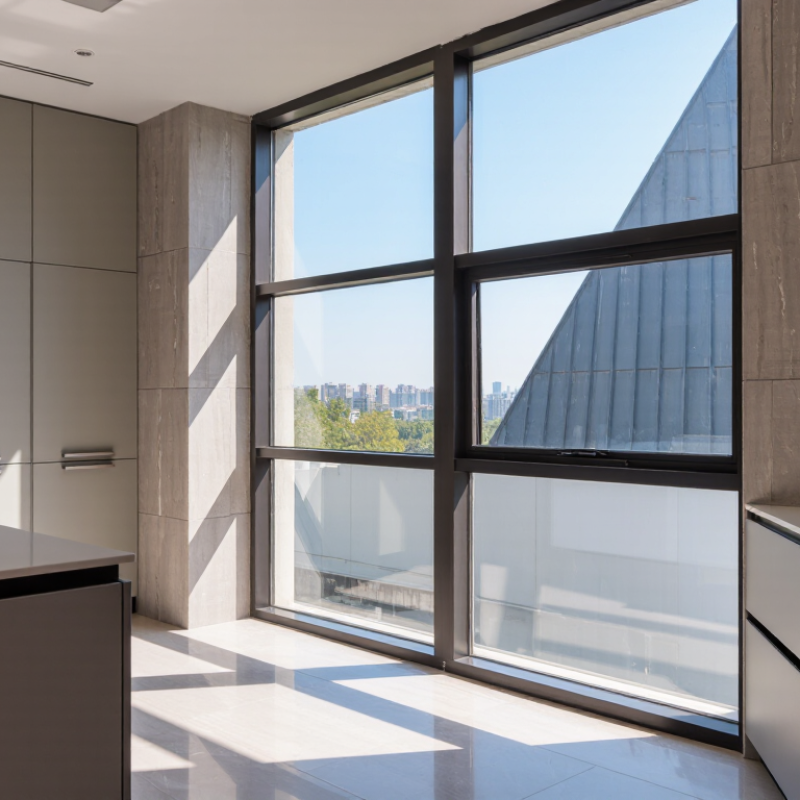
Imagine a dark-colored frame contrasting with pale stone, with sunlight pouring across a kitchen floor—such a striking scene, right? Still, just because a window has a minimal frame doesn’t automatically mean it’s the best choice for you. Things like your budget, climate, house orientation, and how much maintenance you're willing to do all come into play. And those tiny details? They really matter. Always ask your suppliers for documented thermal and air-tightness performance data, and compare whole window systems—not just the frame samples. Here’s a little honest advice: even the most carefully chosen window can fall short if it’s installed poorly. So, that clean, minimalist look should definitely be part of the decision, but don't forget the practical stuff too.
Define Minimalist Aluminum Windows: 2.70 g/cm³ Material Density
Aluminum’s density is approximately 2.70 g/cm³, a value used in technical aluminum design references such as the Aluminum Association’s Aluminum Design Manual. For the same volume, aluminum weighs roughly one-third as much as common structural steel. That difference can help keep window frames slender and reduce the load carried by surrounding walls. Light, but not flimsy by default. Alloy, profile shape, wall thickness, and connection design still determine structural performance.
In a minimalist window, density matters because narrow sightlines leave less material for the frame. A designer might specify a slim extrusion around a large pane, then check deflection and hardware loads rather than relying on density alone. I would not treat the 2.70 figure as proof of strength; that would be an easy mistake. The U.S. Department of Energy estimates that windows account for about 25–30% of residential heating and cooling energy use. This points to the whole assembly—glass, seals, spacers, and frame—not frame material alone.
For an Aluminum Window & Door Manufacturer in Global markets, explaining density with practical limits builds trust. On site, a lighter frame may simplify handling, but poor installation can still cause leaks or binding. Ask for tested thermal and structural performance for the exact configuration. A number is only a starting point.
Assess Frame Strength: 6063 Alloy Performance Depends on Temper and Profile
A minimalist aluminum window can look almost frameless, but its strength comes from the alloy temper and the shape of each extrusion. The Aluminum Association’s Aluminum Design Manual bases structural design on material properties and member geometry, not alloy names alone. ASTM B221 lists minimum properties for extruded aluminum products; for applicable 6063 sections, T5 is around 152 MPa tensile strength and 110 MPa yield strength, while T6 is around 207 MPa and 172 MPa. Values depend on product dimensions and specified temper.
That difference matters when a narrow mullion spans a wide opening. Higher-strength T6 material may help resist bending, but it cannot compensate for a shallow profile, weak corner joints, or poorly sized anchors. Ask for the temper certificate, profile drawings, and project-specific wind-load calculations. When evaluating an Aluminum Window & Door Manufacturer in Asia, compare the tested assembly and its deflection limits, not just the alloy designation. One detail is easy to miss: stronger metal does not automatically mean a quieter, tighter window.
Tips: Request test data for the actual frame configuration. Check mullion depth, wall thickness, and corner connections. If a supplier gives only alloy names, ask for more. That is a reasonable pause.
Understand Thermal Design: Aluminum Conductivity Is About 160–230 W/m·K
Aluminum conducts heat at roughly 160–230 W/m·K, depending on alloy and conditions. This is much higher than the conductivity of insulating materials. In a window frame, heat can travel through the metal from indoors to outdoors. Without a thermal break, the inner frame may feel cold on a winter morning. It can also contribute to condensation when warm, moist indoor air meets a cold surface. A thermal break separates the exterior and interior aluminum sections with a less conductive material, often a reinforced polymer strip. Small details matter.
The conductivity figure describes the material, not the performance of a complete window. Frame geometry, glazing, seals, and installation all affect heat loss. Not the whole story. When speaking with an Aluminum Window & Door Manufacturer in Africa, ask how the thermal break is designed and what performance data applies to the complete unit. Consider the project’s local temperatures and indoor humidity, too. A slim frame may look elegant, but appearance alone cannot show how effectively it controls heat transfer. I would not judge a system from one number; drawings and test results can reveal details that a product photograph cannot.
Why Choose Aluminum Minimalist Windows for Your Project? — Understand Thermal Design: Aluminum Conductivity Is About 160–230 W/m·K
Design note: Thermal conductivity describes heat flow through a material, not the performance of a complete window. Compare whole-window U-factors for overall heat-loss performance; thermally broken aluminum frames help limit heat transfer through the frame.
Compare Window Ratings: Check NFRC U-Factor and Solar Heat Gain Coefficient
Why Choose Aluminum Minimalist Windows for Your Project?
Aluminum minimalist windows create slim sightlines and bring more daylight into a room. Their clean frames suit modern homes, renovations, and commercial spaces. Yet a narrow frame does not automatically mean strong thermal performance. Ask for the complete window’s NFRC ratings, not assumptions based on frame material alone. Glass type, spacers, frame design, and thermal breaks all affect the result.
NFRC U-factor measures how quickly heat passes through the whole window. A lower value generally means better insulation, which can matter during cold nights beside a large glazed opening.
Solar Heat Gain Coefficient, or SHGC, measures how much solar heat enters. Lower SHGC can help limit heat from strong afternoon sun, while a higher value may be useful in cooler locations.
Compare ratings for matching sizes and configurations; otherwise, the numbers may not tell the full story. Check the project’s climate and window orientation, too. A south-facing window and a shaded north-facing one may need different balances. Ratings help, but installation quality matters as well.
Tips: Compare NFRC-certified U-factor and SHGC together. Check whether the tested unit includes the same glazing and frame options you plan to order. Ask your installer how the window will be sealed. Small gaps can undermine a good rating. And be honest about comfort priorities; one specification rarely solves every issue.
Verify Air, Water, and Structural Performance Against AAMA/WDMA/CSA Standards
Why Choose Aluminum Minimalist Windows for Your Project?
Slim aluminum frames create clean sightlines, but appearance cannot replace tested performance. A well-designed window must control air leakage, resist wind-driven rain, and remain stable under structural pressure. These details matter in coastal apartments, high-rise offices, and exposed hillside homes.
Ask an Aluminum Window & Door Manufacturer in India for documented testing against applicable AAMA, WDMA, and CSA requirements. Air testing measures unwanted leakage through seals, joints, and operating hardware. Water testing uses a spray rack and controlled pressure to expose weak corners or drainage paths. Structural testing checks frame deflection, glass support, fasteners, and anchorage under simulated wind loads. Test reports should identify the exact product, size, configuration, pressure, and laboratory conditions.
Small details often decide the result. A poorly seated gasket can create a visible draft near the meeting rail. Inadequate sill drainage may leave water behind the frame after heavy rain. Installation also matters; even a tested window can fail when shims, flashing, or perimeter sealants are inconsistent. That is easy to overlook. Review shop drawings, interface conditions, and installation records before approval. I would also question results based on smaller samples, because performance may change with larger sizes, vents, corner units, or different glass weights. Standards guide the process, but project exposure and workmanship still require careful judgment.
Evaluate Sustainability: Aluminum Recycling Uses About 95% Less Energy Than Primary Production
For minimalist windows, aluminum’s sustainability story begins before installation. The International Aluminium Institute (IAI) reports that recycling aluminum requires about 5% of the energy needed to produce primary metal—roughly 95% less. That is a substantial difference. It reflects the energy-intensive work of refining new metal from ore, compared with remelting recovered aluminum. The Aluminum Association also cites this approximate energy saving in its industry guidance. For a project team comparing frame materials, recycled content can therefore be a meaningful specification, not just a marketing phrase.
The detail is in the supply chain. A slim frame may include coatings, thermal breaks, sealants, and mixed alloys, so clean recovery depends on how components are separated at end of life. Ask suppliers for documented recycled-content figures and clarify whether they refer to pre-consumer or post-consumer material. IAI’s recycling data also notes that aluminum can be recycled repeatedly while retaining its material properties, but that does not guarantee every window will be collected and recycled. Not automatically. On site, labeled offcuts and careful sorting can help keep usable metal out of mixed construction waste. The practical caveat: recycled content, collection access, and frame design all matter, and one figure alone cannot describe a window’s full environmental impact.
Conclusion
An Aluminum Minimalist Window combines slim visual lines with the strength and durability of aluminum, a material with an approximate density of 2.70 g/cm³. When evaluating frame performance, do not judge strength by alloy type alone: 6063 aluminum performance depends on its temper, profile geometry, wall thickness, and connection design. Because aluminum conducts heat at roughly 160–230 W/m·K, an effective thermal design should include thermal breaks, suitable glazing, and properly sealed joints to improve energy efficiency and inDoor Comfort.
For a reliable comparison, review independently verified NFRC U-Factor and Solar Heat Gain Coefficient ratings, since these values indicate heat transfer and solar-control performance. The window should also be assessed for air leakage, water resistance, and structural strength according to applicable AAMA, WDMA, or CSA standards. From a sustainability perspective, aluminum is highly recyclable, and recycling generally requires about 95% less energy than producing primary aluminum, helping reduce resource consumption over the product’s life cycle.