MAKE BUILDINGS MORE FLEXIBLE

Leave Your Message
MAKE BUILDINGS MORE FLEXIBLE
Automatic Doors have changed all types of entry access control and have made it less painful for users in various sectors. The latest market research report from Fortune Business Insights on automatic doors states that the global automatic door market is set to reach USD 27.2 billion by 2025 and growing at a CAGR of 6.9% by demand for entryways as communications in commercial, residential, and health areas, which primarily emphasize the need for safety and convenience, are basically driving the demand. With new technologies, including touchless sensors and smart integration, automatic doors have become an essential ingredient of improved architectural design.
Innovating this kind of trend is Foshan CIVO Technology Co., Ltd., the community's leading supplier of architectural aluminum system solutions. CIVO is a company that provides research and development, production, sales, as well as service upon system door and window products. That is also what CIVO promises to provide, the solutions keeping in mind the evolving needs of customers with a commitment to quality database. This creates a good touch between cutting-edge technology and automatic doors to upgrade the experience for users and to adhere to the latest industry regulations regarding safety and accessibility. Forward-looking into 2025, such advances in automatic doors will grow more yet, continuing, as they are destined to do, shaping the way forward for building materials and systems in a significant way.

The Smart Automatic Door Control Industry is evolving rapidly with smart technologies for automatic doors coming to the fore, thereby changing the access control landscape. By the year 2025, one expects these systems to obfuscate security, convenience, and energy efficiency-counter features. Smart automatic doors will position sensors and AI algorithms to eliminate all entry processes thereby bringing access to utmost smoothness while dramatically reducing the waiting time for all. We are seeing the very interestingly trending addition of biometric technologies, such as facial recognition and fingerprint scanning. This strengthens security procedures while also giving a personal touch to users. Along these lines, increased efficient management of access permissions ensures that only authorized staff may enter a sensitive area. Thus these innovations promise greater scope of automatic doors in far-off places from that of retail stores to corporate offices to even health care facilities. In tandem with enhanced security, energy efficiency is becoming a primary concern for many organizations. Automatic doors equipped with smart sensors utilize traffic patterns to optimize their operations depending on needs. This circumvents unnecessary energy use by calling for the doors to be used less during off-peak hours. Such dual concern- for security and sustainability- is what will characterize the smart technology automatic door sector because it defines and redefines access control solutions. The combined effect of these advanced systems as we move towards 2025 will work to bolster operational efficiency alongside establishing safe and greener building access.
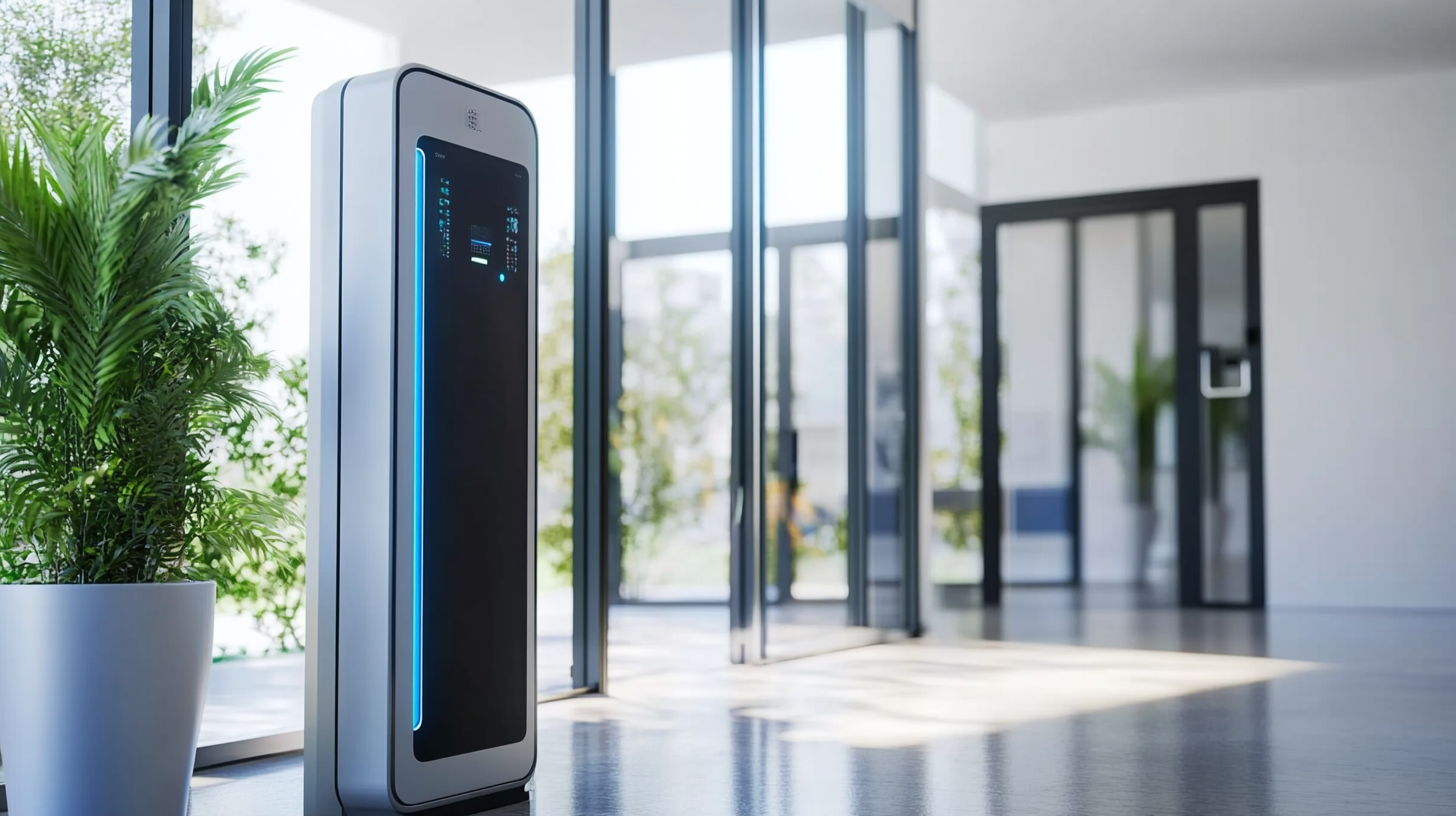
Considerations from various market forces will continue to guide the fate of the automatic door industry till 2025 onward, facilitating substantial growth. A recently published report states that in 2023, the automatic door market was projected to reach somewhere near $8.9 billion in the world, gradually rising towards $9.2 billion in 2024 and $12.7 billion in 2032, giving it a CAGR of 4.1%. Growth can be firmly attributed to technological advances that continue to enrich user experience in the various industries.
Among many, the need for improved security and access control solutions is driving the growth of this market, especially in commercial and public spaces. The seamless flow of movement for people and goods has emerged as a necessity in all businesses, and so are automatic doors. Control systems have been developed, allowing from fully automatic, semi-automatic, to motion-assisted ones, which makes them quite versatile for many settings that include retail places, hospitals, and transport hubs.
One of the factors involved in transforming access control solutions are various elements including sensors, access control systems, and advanced operating mechanisms. With IoT technology integration and smart sensors, automation has seemingly changed the face of efficiency and security by enabling live monitoring and management of door systems. With these prospects for the near future, it fits the picture of a prospering market that can optimally furnish the promise of automation to enhance access, safety, and convenience for its users, the world over.

The automatic door industry can be truly termed as going through a sea change. These changes are caused by the revolutionary factors offered by the Internet of Things (IoT). By 2025, a defining transformation in the amalgamation of access control systems with smart technology impacts functionality and security is being witnessed. IoT-enabled automatic doors now not just streamline entry and exit operations but also serve real-time data analytics to allow facilities to monitor usage patterns and operational efficiency.
While the global market for automatic doors expands from $9.2 billion in 2024 to $12.7 million for 2032, innovations are spurring into action. Here, the demand for advanced access control systems is rising, full automation, semi-automatic, and sensor-based solutions are needed. The incorporation of advanced components has made these automatic doors smarter and responsive through integrating access control systems, sensors, and motorized actuators.
With our step into this change, one cannot emphasize enough the impact of IoT. Automatic doors today are capable of interfacing seamlessly with security systems, which allow for enhancements like remote access management and automated alerts for unauthorized entries. The trend thus not only revolutionizes access control but also integrates with the broader agenda of establishing smart buildings aimed at bettering safety and energy efficiency. Truly, the automatic Door World is set into a new age of comfort and security.

As the automatic door world continues to change, sustainability is becoming an increasingly important consideration in manufacturing and installation. The trend toward eco-friendliness brings with it innovative methods of reducing waste and energy consumption. Manufacturers are turning increasingly to using recycled materials to make automatic doors, including aluminum and glass, which not only cuts down on the carbon footprint but further beautifies and strengthens the product's aesthetics and durability.
Another trend transforming the industry is the energy-efficient design of automatic doors with modern sensor and automation technologies that optimize their use by activating the functioning of the door only when it is required. Not only does this reduce energy consumption, but it refines user experience with largely uninterrupted access and egress. In addition, the companies see every lifecycle of their products, designing doors to be disassembled for reconditioning at the end of their service life, thus encouraging a circular economy.
Sustainable installation practices are gaining traction, with companies making use of adhesives and sealants that are eco-friendly and have lower organic volatile compounds (VOCs). Such options not only comply with stricter regulations but also make for healthier indoor environments. While following this trend, the automatic door industry is not only preparing for the future but is also instrumental in the larger sustainability movement. Going into 2025, one thing is clear: the incorporation of sustainability will greatly influence the molding of access control solutions.
Automatic doors are an essential design feature in today̕s constructions, providing easy access and safety for many users. Approaching the time of 2025, trends clearly indicate a growing need for these doors in public and private premises. Given that an estimated one person in five suffers from some disabling condition, the design and placement of automatic doors become one very important piece in the equity of access to a facility. With the removal of traditional doors as the physical barrier, automatic doors better allow persons with mobility challenges to independently and confidently negotiate the space.
Furthermore, automatic doors are a safety factor beyond their accessibility features. Such systems can be outfitted with sensors that detect obstacles, thereby preventing accidents and ensuring smooth operations through busy areas. During emergencies, automatic doors would allow a rapid escape path, facilitating the movement of foot traffic and avoiding bottlenecks associated with manual doors. The combination of technology and sophisticated design not only elevates the experience of the user but also plays an important role in creating safe spaces for all.
As these industries further develop, innovations such as touchless activation and smart integration with security systems are going to completely revolutionize the operation of automatic doors. These new-age automatic doors are expected to prioritize safety and access for everybody, thereby creating a future society where engagement with one̕s surroundings is a right for all. Sustaining such endeavors is the only feasible means of achieving environments that truly uphold the interests of all community members.
In the automatic door industry, with every advancing day, user experience design is becoming a pivotal determinant of innovation, establishing new operations and interactions with these systems. A predominant focus on intuitive interfaces for seamless interaction can, by 2025, be anticipated. Touchless technology and advanced sensors have become everyday expectations to improve convenience and hygiene amidst today's health-conscious populace. While keeping touchpoints to a minimum, these features also enhance satisfaction and add notably to user safety and well-being.
Customizable settings in automatic door systems that allow users to determine their own experience based on specific needs constitute a new trend in automatic doors. For instance, adjustable settings recognizing personal preferences for speed, sensitivity, and mode of operation can maximize accessibility for users with widely varying degrees of physical ability. This ensures that automatic doors are much more than a convenience; they form an indispensable part of an inclusive environment that embraces diverse user needs.
Incorporating the aesthetic layer into the user experience design is becoming ever more important. Automatic doors are now being designed to be in sync with local architectural styles, leading to an enhanced integration of function with design. This makes the entrance not only aesthetically pleasing but also welcoming, thus amplifying the user experience. The year 2025 will define new pathways through the intermingling of technology, personalization, and design toward how automatic doors will be seen by users, becoming evermore accessible, efficient, and fashionable.
The automatic door market is set for a series of changes between now and 2025, prompted by emerging technologies and transforming consumer expectations. The global automatic door market is expected to evolve from the present $9.2 billion in 2024 to $12.7 billion by 2032, with a steady growth CAGR of 4.1%, making it crucially important to start looking into the challenges coming up on the horizon.
Pressing among these challenges is the control system pattern that would integrate advanced levels of configuration. A fully automated solution implies full knowledge of sensor components, access control systems, and operational mechanisms. It becomes important for manufacturers and service providers to ensure seamless interoperability among these components to enhance user experience and security.
In addition, sustainability will be a significant driver influencing consumer choices and industry standards. Stakeholders increasingly favor energy-efficient technologies and materials to develop automatic door systems. This transition should support global sustainability commitments while balancing affordability and usability.
Innovation and strategic planning will provide the automatic door industry with an opportunity going forward. Stakeholders will have to grapple with the issues of technological integration and the increasing demand for sustainability to stay competitive and relevant in a fast-converging market.
The market for automatic doors, including sliding, swinging, folding, and revolving doors, will increase significantly from 2024 to 2032, when a market size of US$9.2 billion will reach US$12.7 billion, at a compound annual growth rate (CAGR) of 4.1%. Behind higher technological innovations and a need for advanced access control products in various industries, it is because of rapid improvements and changes. Sophisticated automated systems are institutionally introducing these systems into commercial and residential facilities, a transformation toward seamless access management.
Such analyses of the market will reveal the growing need for various control systems, completely automatic, partially automatic, etc. However, most components of fully automatic doors are operators, sensors, access control systems, and motors. Better security, energy savings, and better user experience are all pushing these technologies further, going gradually to worldwide adoption. Nearer 2025, automatic doors will considered more and more beneficial for businesses and homes as, today, everyone knows that these will be expected in the future construction designs.
The global automatic door market is expected to grow to approximately $12.7 billion by 2032.
The growth is driven by advancements in technology, rising demand for security and access control solutions, and the need for seamless movement in various sectors.
IoT technology and smart sensors enhance operational efficiency and security by enabling real-time monitoring and management of door systems.
Automatic doors eliminate physical barriers and allow individuals with mobility challenges to navigate spaces independently, thus improving equitable access.
Automatic doors prevent accidents with obstacle detection sensors and facilitate rapid egress in emergencies, reducing bottlenecks.
Future innovations may include touchless activation and smart integration with security systems to enhance functionality and user experience.
The market offers a range of systems, from fully automatic to semi-automatic and motion-assisted options, suitable for environments like retail, healthcare, and transportation hubs.
They enhance safety, improve accessibility for individuals with disabilities, and streamline movement in busy environments, contributing to a better user experience.
The compound annual growth rate (CAGR) of the automatic door market is projected to be 4.1%.
The development of automatic doors will promote a more inclusive society, improving accessibility and safety for all individuals in various environments.





 Phone
Phone Send Email
 whatsapp
 Facebook
 Youtube
 LinkedIn
 Instagram
 Twitter
 Tiktok
